Brazil Biotech Hub: $10M Project to Accelerate Drug Design
A long-vacant government building in Belo Horizonte, Brazil, is being repurposed into a Computational Biotechnology and Prototyping Unit under the Ezequiel Dias Foundation (Funed), with an estimated investment of R$ 10 million.
Brian Woodward·updated July 08, 2026
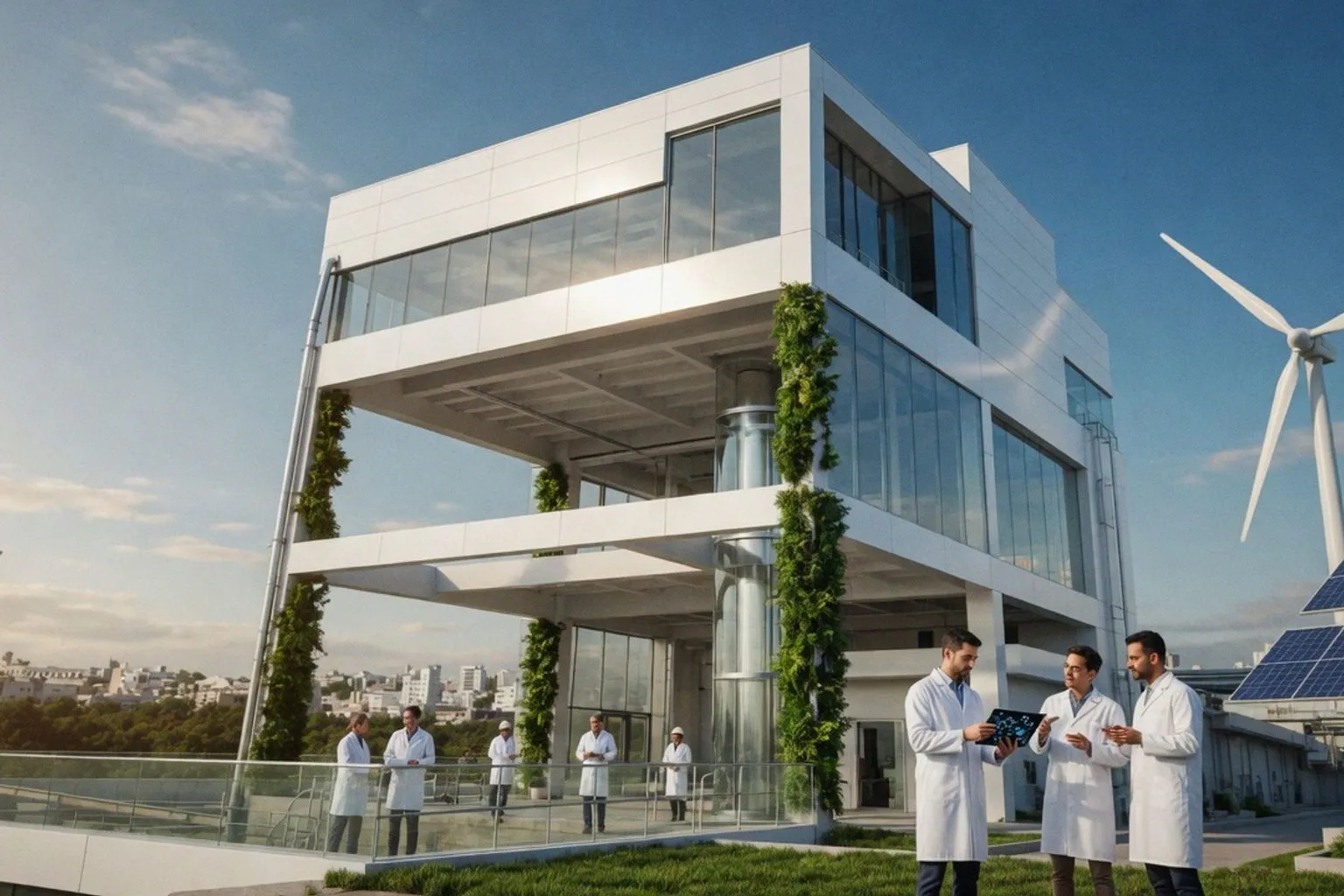
From abandoned shell to computational biotech hub
The building, located in the Gameleira district of western Belo Horizonte, was originally conceived during the Hélio Garcia administration to expand Funed's pharmaceutical output via gravity-based production. That technology became obsolete before the structure was completed, leaving the site functionally abandoned for more than three decades. The Minas Gerais government has now committed to converting it into the Computational Biotechnology and Prototyping Unit — a facility explicitly designed to consolidate research platforms and accelerate the transition of laboratory findings into biotechnological drugs destined for Brazil's Unified Health System (SUS).
Felipe Attiê, president of Funed, indicated that ongoing projects from other areas of the foundation will be relocated into the new space, alongside initiatives of "high complexity and greater added value." Operations are expected to commence by the end of the second half of 2026, though phased construction timelines and specific drug targets have not been disclosed.
A broader pattern: institutional capital flows into biofabrication infrastructure
The Brazil project does not exist in isolation. We observe a concurrent signal from Switzerland, where Treeless AG — an ETH Zurich spin-off focused on microorganism-based material systems — closed an oversubscribed CHF 1.2 million financing round. The company is building a modular pilot factory for biofabricated materials applicable to cosmetics, adhesives, and advanced composites, leveraging organic side-streams and microbial platforms. While the cohort and application differ from Funed's pharmaceutical mandate, the mechanistic overlap is notable: both initiatives formalize the translation of computational and biological research into scalable production infrastructure.
For capital allocators tracking the biotech vertical, these developments suggest that institutional and angel investment interest in biomanufacturing capacity is widening. Those assessing diversified exposure to the sector may find it useful to examine how asset management strategies in emerging biotech are structuring allocations across geographies and development stages.
What the longevity-oriented observer should monitor
The Funed announcement carries limited granularity — no specific compounds, therapeutic targets, or clinical-stage timelines are named. The operative question for our domain is whether computational biotechnology platforms of this kind will prioritize molecules relevant to cellular aging, senescence modulation, or metabolic pathway intervention. Brazil's SUS framework is oriented toward broad public health needs, which historically skews toward infectious disease and chronic condition management rather than longevity-specific endpoints. However, the computational prototyping mandate leaves room for cross-pollination.
We should track three variables: which drug classes Funed prioritizes once the unit is operational; whether the facility's computational infrastructure incorporates AI-driven molecular screening (a capability that would accelerate discovery of geroprotective candidates); and how quickly the prototype-to-clinic pipeline demonstrates measurable output. Until cohort-level data and mechanistic endpoints emerge from this facility, its direct relevance to longevity science remains a hypothesis worth monitoring — not a confirmed inflection point.