Samsung Expands Galaxy Watch Health Data Into Clinical Research
Samsung has partnered with digital clinical research organization Alcedis to channel Galaxy Watch biometric data into medical trials.
Julian Vance·updated June 26, 2026
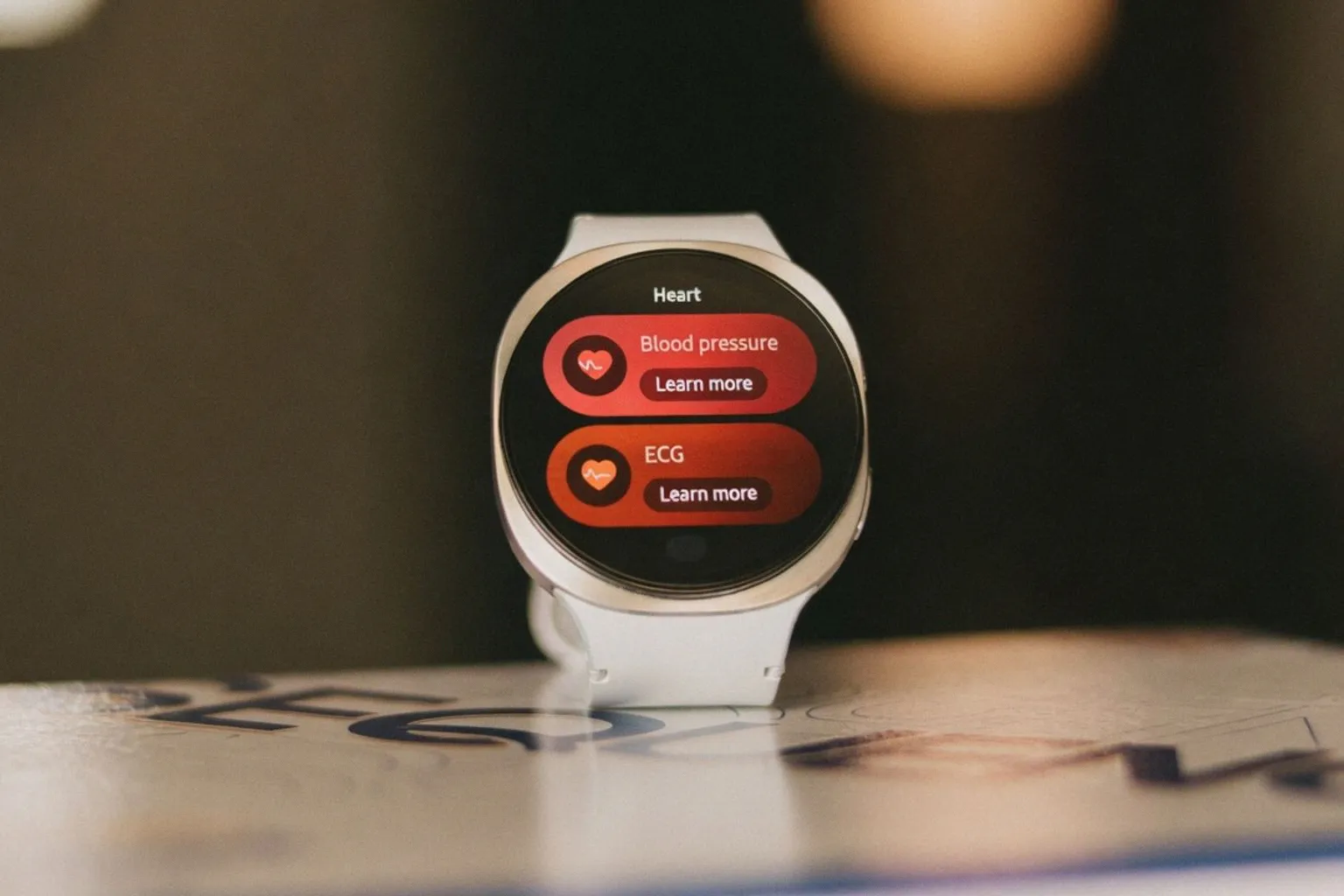
From wrist to protocol
The mechanics of the partnership are delineated cleanly. Samsung contributes the hardware—Galaxy Watch sensors including Bioelectrical Impedance Analysis (BIA), Electrodermal Activity (EDA), and the device's medical-grade tracking modules for sleep apnea and atrial fibrillation (AFib) detection—along with backend infrastructure. Alcedis assumes the regulatory and operational layer: protocol compliance, patient engagement, and trial management.
The underlying rationale is straightforward: continuous, passive monitoring in free-living conditions captures physiological variance that episodic clinic visits routinely miss. For studies tracking slow-moving variables—metabolic shifts, autonomic balance, sleep architecture—this could meaningfully compress recruitment timelines and reduce per-subject cost. The opportunity, in other words, is structural rather than merely logistical.
Signal quality and evidentiary limits
Not all modalities carry equivalent weight, and conflating them risks weakening downstream inferences. BIA offers a proxy for body composition, useful for longitudinal trend detection though not interchangeable with DEXA in rigorous protocols. EDA reflects sympathetic tone; its mechanistic interpretation across extended cohort studies remains under-characterized. Samsung frames the sleep apnea and AFib modules as medical-grade, though independent validation against gold-standard reference measurements varies by jurisdiction and study design.
For longevity research specifically, the sleep data warrants our closest attention. Sleep fragmentation has documented mechanistic links to impaired cellular repair pathways and may modulate the same hormonal and inflammatory cascades that longevity protocols routinely target. Continuous ambulatory capture could supply high-density sleep architecture data that laboratory polysomnography cannot feasibly scale across large cohorts. That is a genuine methodological advance, if the validation holds.
What to watch
Samsung is reportedly preparing the Galaxy Watch 9 and Galaxy Watch Ultra 2 for launch next month. Reported feature additions include hearing health metrics and the possibility of non-invasive glucose monitoring. The glucose claim warrants particular skepticism: prior industry attempts at continuous non-invasive glucose measurement have repeatedly fallen short of the accuracy benchmarks required for clinical or even reliable self-monitoring use. History counsels caution.
For those of us tracking the longevity implications, the practical questions are narrowly drawn. Has Alcedis published its data curation and endpoint ascertainment protocols? Are the trials designed around pre-registered hypotheses, or exploratory signal-mining? How are device attrition and inconsistent wear-time being handled in the statistical plan? Until peer-reviewed validation appears, the appropriate posture is provisional interest. A continuous stream of wearable data does not, by volume alone, constitute clinical evidence.