Abu Dhabi and Novartis Genomics Partnership: Strategic Research and Precision Medicine Goals
We observe a new institutional alignment between state-level genomics infrastructure and multinational pharmaceutical capacity.
Brian Woodward·updated June 30, 2026
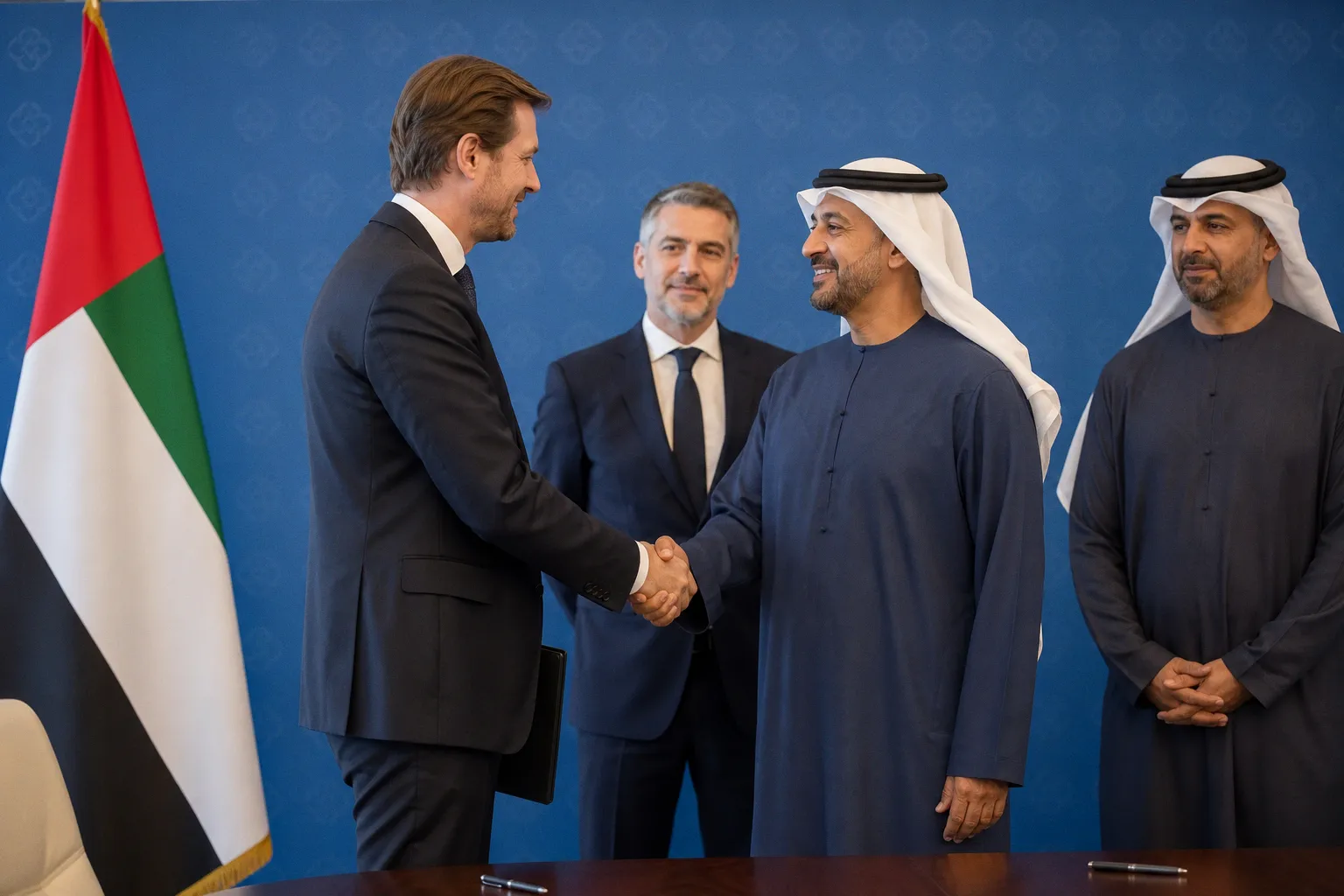
What the MOU actually covers
The collaboration operates on three axes: joint genomics research, workforce and scientific capability development, and access pathways for advanced therapies. The stated objective is to convert genomic insights into concrete improvements in prevention, diagnosis, and treatment. No specific drug targets, trial timelines, or funding figures have been disclosed. The agreement builds on an existing relationship between DoH and Novartis that already spans clinical research, health technology assessment, and policy engagement in innovative treatment areas.
Abu Dhabi's leverage in this arrangement is the Emirati Genome Program, which has reportedly sequenced more than 900,000 genomes to date. A dataset of that scale, drawn from a relatively defined population cohort, offers mechanistic advantages: reduced genetic heterogeneity can simplify signal-to-noise ratios when identifying disease-associated variants. Dr. Asma Ibrahim Al Mannaei, Executive Director of the Health Life Sciences Sector at DoH, characterized the collaboration as accelerating "the translation of research into solutions that can improve outcomes for patients and communities." Mohamed Ezz Eldin, Head of the Novartis GCC Cluster, framed the MOU as an opportunity to merge "global scientific expertise with Abu Dhabi's capabilities in genomics and precision medicine."
Why this matters for longevity science
Population-scale genomics programs are, in effect, longitudinal phenotyping engines. The more complete the linkage between genotype, clinical phenotype, and longitudinal health outcomes, the higher the resolution at which we can identify modifiable biomarkers of biological aging. Abu Dhabi's dataset — nearly a million sequenced genomes within a defined demographic — is a cohort of nontrivial size. When paired with Novartis's drug development infrastructure and therapeutic pipeline, the potential output is not just regionally relevant medicine but data that could refine our understanding of age-associated disease pathways globally.
That said, we should note the current evidence ceiling. An MOU is an exploratory framework, not a funded clinical program. The announcement contains no specifics on trial design, target indications, or data-sharing protocols that would allow external researchers to assess the scientific yield. The collaboration's value for longevity science will depend entirely on whether genomic data is linked to deep longitudinal phenotyping — not merely sequenced and archived.
Context and what to track
Globally, we observe a pattern of state-pharma genomics partnerships accelerating: the UK Biobank's pharmaceutical collaborations, Saudi Arabia's Saudi Human Genome Program, and now Abu Dhabi's expanded Novartis alignment. The competitive dynamic is clear — nations with large, relatively consanguineous population cohorts are positioning these datasets as strategic biomedical assets.
For practitioners and researchers in the longevity space, the relevant question is translational yield. Specifically: will this partnership produce population-specific variant data on age-related pathways — mTOR signaling, NAD+ metabolism, senescence markers — or will it remain focused on monogenic disease and oncology, as most pharmaceutical genomics collaborations historically have? The MOU's language on "precision medicine" is broad. Until we see published study protocols or data-access frameworks, the mechanistic relevance to geroscience remains speculative.
We will track whether this agreement surfaces in ClinicalTrials.gov registrations, peer-reviewed outputs, or Novartis pipeline disclosures over the next 12–18 months. That will be the signal that separates institutional positioning from actual translational momentum.