Heart rate variability: is tracking it worth the stress?
Each heartbeat carries a tiny variation in the space between it and the next — a flicker of irregularity that, when tracked across minutes and hours, becomes one of the most informative signals your body produces.
Jessica Clayton·Updated: July 06, 2026·10 min read
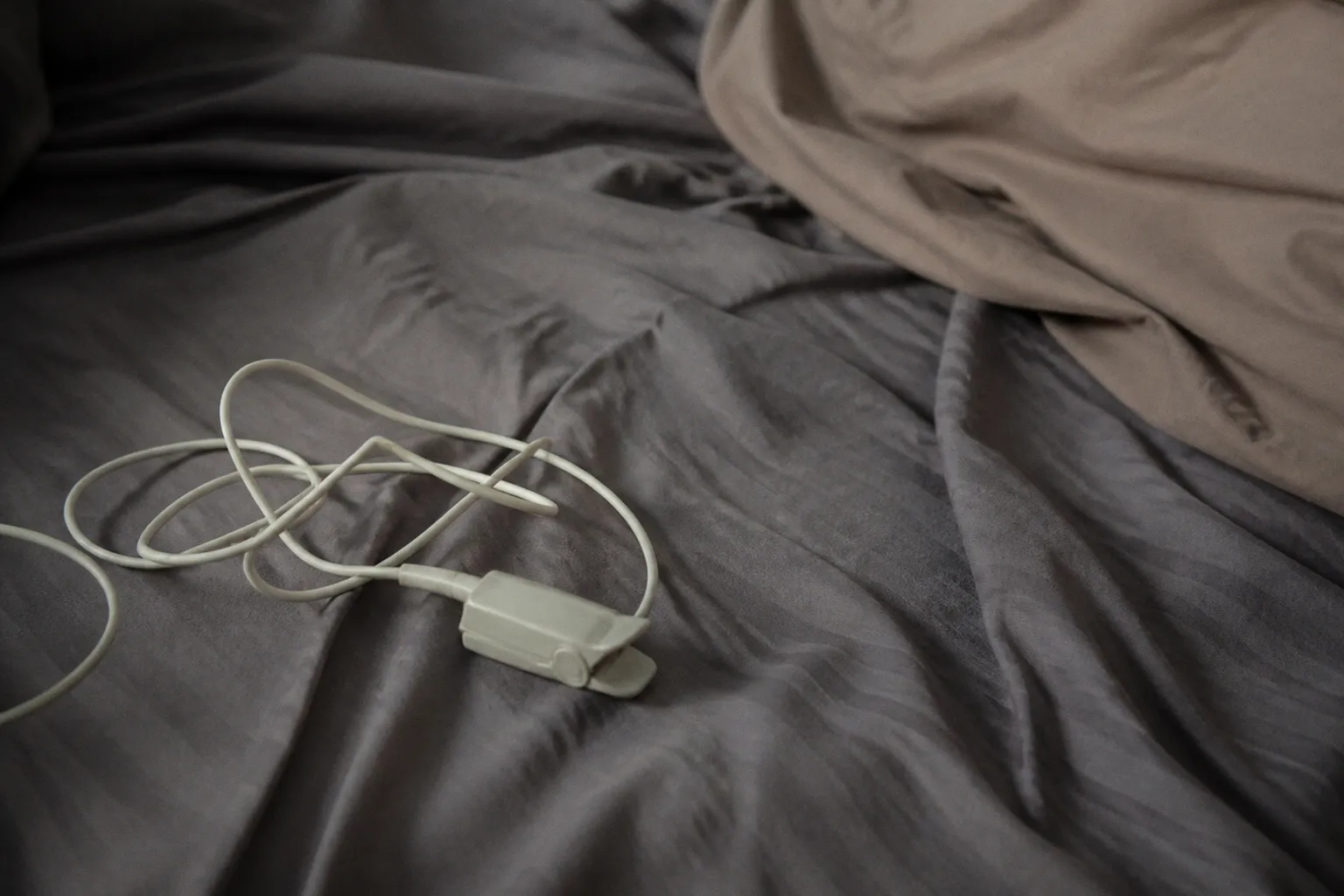
What follows is a personal accounting of what the signal has and has not done for me, set against what the underlying physiology actually supports. If you are weighing whether to start tracking your own HRV, or wondering whether to keep going, the most useful thing I can offer is not a protocol. It is a frame for reading the data in a way that supports recovery rather than competes with it.
The Autonomic Nervous System: Decoding the Heart's Rhythm
The heart does not beat like a metronome. Even when you sit perfectly still and your breathing slows to a near-pause, the interval between one contraction and the next shifts by a few milliseconds — sometimes more, sometimes less, depending on what the autonomic nervous system is doing in that exact moment. Heart rate variability captures this micro-drift. When researchers and clinicians discuss HRV, they are usually referring to RMSSD — the root mean square of successive differences between normal beats — a number expressed in milliseconds that quantifies how much the heart is willing to deviate from a perfectly even cadence.
That deviation is not noise. It is the signature of two opposing branches of the autonomic nervous system negotiating in real time. The sympathetic branch accelerates the heart when you stand up, lift something heavy, or anticipate a threat — the fight-or-flight gear. The parasympathetic branch, traveling mostly through the vagus nerve, applies the brake — the rest-and-digest down-regulation that lets the heart settle into a slower, more variable rhythm. Higher HRV, in this framing, reflects a parasympathetic system with plenty of room to modulate. Lower HRV often suggests the sympathetic side is dominating, either because of acute stress, illness, overtraining, or the slow accumulation of allostatic load — the wear that builds when stress hormones stay elevated for too long.
This is why HRV appeals to anyone interested in recovery. Unlike resting heart rate, which is a relatively blunt summary, HRV behaves like a perishable report card: it tells you, this morning, how recovered your nervous system actually is. The metric also has a circadian contour. Values typically climb through deep sleep, when parasympathetic tone is at its strongest, and dip during periods of high physical or psychological demand. Wearing a monitor overnight turns sleep itself into a kind of measurement chamber, and the morning number becomes a proxy for how restful the night really was.
Why Your Personal Baseline Outperforms Population Norms
The first thing to know about HRV is that there is no universal target. Healthy adults can sit anywhere from below 20 milliseconds to over 200 milliseconds, and the range depends on age, genetics, sex, training status, and a dozen other variables the literature has not fully untangled. HRV also declines naturally with age — a 55-year-old will, on average, post lower numbers than a 25-year-old, regardless of how well either of them sleeps. This makes any cross-person comparison essentially meaningless. My HRV is not your HRV, and neither of us should be quoting each other's numbers as if they belonged to the same scale.
There is no universal target. What matters is your own trajectory.
What matters is your own trajectory. A personal baseline — established over weeks of consistent measurement under consistent conditions — gives you something a population chart never can: a reference point for you, today, against you, last Tuesday. When my own morning RMSSD drifts five or ten points below my rolling baseline, I know something shifted. It might be the wine with dinner, the late-night email, the long run I did not recover from, or a cold I have not noticed yet. The number does not tell me which — only that my nervous system is asking for something different today.
This is where consumer HRV tracking can quietly become useful. The wearable is not diagnosing disease. It is not telling you whether you are fit. It is, at best, a high-resolution diary of how your autonomic nervous system responds to the days you actually live. Read that way, the metric functions less like a score and more like a sentence your body is finishing each morning — incomplete without context, but informative once you supply it.
The Impact of Lifestyle Factors on Daily HRV Fluctuations
Once you start logging HRV, the day-to-day becomes surprisingly legible. A short list of inputs reliably nudges the number up or down, and recognizing them turns the metric into something practical rather than abstract.
| Factor | Typical effect on next-morning HRV | Notes |
|---|---|---|
| Alcohol (even 1–2 drinks) | Noticeable drop | Often the single largest acute depressor |
| Late, heavy meals | Modest drop | Digestive load competes with overnight recovery |
| High-intensity training | Temporary drop, then rise | The classic supercompensation curve |
| Fragmented or short sleep | Significant drop | Reduces time spent in deep, vagal-dominant sleep |
| Consistent sleep and wake times | Gradual rise | The body learns the cadence and prepares for it |
| Slow breathwork with extended exhales | Acute rise within minutes | Direct vagal engagement |
Alcohol deserves its own paragraph, because even small amounts produce outsized drops the following morning — often larger than what a hard training session creates. Late and heavy meals produce a similar but milder signal, partly because digestion pulls autonomic attention away from the parasympathetic work of overnight repair. A high-intensity workout can drop HRV for a day or two before the rebound lifts it above where it started, which is the familiar supercompensation pattern experienced athletes learn to read.
On the other side, slow-paced breathing with extended exhales directly engages the vagus nerve and can shift HRV in a single session. If you want a clean demonstration of the mechanism, the box-breathing technique behind this kind of acute HRV change is worth ten quiet minutes — the lift is real, and it tells you something honest about how much of the metric sits under conscious influence.
Consistency matters more than any single intervention. Going to bed at roughly the same time, in roughly the same conditions, gives your nervous system a cadence it can learn to anticipate. Anticipation itself is part of parasympathetic tone. The body that expects sleep sleeps better, and the HRV readings reflect that, week after week.
Navigating the Data: When HRV Signals a Need for Rest
The hardest part of HRV tracking is not collecting the data. It is deciding what to do with it. A morning number that sits ten points below baseline is, by itself, neither an alarm nor a verdict. It is a prompt — usually a gentle one — to ask whether today needs a slightly different shape.
In my own practice, I treat a sustained drop as a request for maintenance rather than a failure to optimize. A walk instead of a sprint session. An earlier dinner. Skipping the third coffee. Sometimes just acknowledging that yesterday was heavier than I noticed at the time. The metric is most useful precisely when it interrupts a pattern I would otherwise have repeated on autopilot.
There are limits, though. A persistently suppressed HRV over weeks, especially when paired with poor sleep, low mood, or visible signs of illness, is worth bringing to a clinician — not because the wearable has diagnosed anything, but because the trend can be a useful prompt to seek a fuller assessment. The consumer device is a guide, not a verdict. Anything that turns into a daily medical reading should be reframed back into what it actually measures: short-term autonomic tone, in a single person, on a single night, under whatever conditions that night provided.
It is also worth remembering that HRV does not behave like a stock chart. It does not climb forever with better habits. It oscillates. Some stretches run below baseline for reasons that do not correspond to anything obvious. Treating those periods as a problem to solve is usually the wrong move. Treating them as weather to wait out is closer to what the body is actually asking for.
The Psychological Toll of Constant Physiological Monitoring
And here is the tension I keep returning to. A metric designed to help us listen to the body can, in certain hands, become another instrument of surveillance over it. The same number that tells me to rest can also, on a bad morning, become evidence that I am failing at recovery — that my sleep was not good enough, my stress not managed well enough, my habits not disciplined enough. The allostatic load, in those moments, is psychological as much as physiological.
I have watched myself do it. A three-point drop, on a day when nothing visibly went wrong, can needle at me in ways that a poor night's sleep never did on its own. There is something about quantification that flatters the anxious mind: it offers the promise that if we just measure carefully enough, we can engineer our way out of being tired. But bodies are not engines, and recovery is not a KPI. Treating HRV as a daily report card risks turning rest itself into a performance, which is the opposite of what parasympathetic down-regulation actually requires.
The data is a tool. The relationship you build with it is the variable that actually matters.
The honest answer to whether tracking HRV is worth the stress is that it depends on what you do with the number. If the reading becomes a permission slip to adjust — softer training, an earlier evening, a longer walk, a slower morning — the metric is genuinely useful. If it becomes another thing to optimize, another edge to sharpen, another small anxiety to carry into the day, the cost starts to outweigh the benefit. The data is a tool. The relationship you build with it is the variable that actually matters.
A Quieter Way to Read the Signal
What I have settled on, after more than a year of consistent overnight tracking, is a quieter relationship with the number. I glance at it in the morning, the way I glance at the weather. If it is far below baseline, I treat the day as a recovery day, full stop. If it is near or above baseline, I proceed as planned. I do not chase peaks. I do not compare my readings to anyone else's. I do not pretend that the metric tells me something about my worth, my discipline, or my trajectory as a person.
What I do trust is the rhythm underneath — the slow, daily conversation between effort and rest, between sympathetic demand and parasympathetic return, between the days I push and the days I let the body settle. HRV, read gently, is one way to stay in that conversation. Read any other way, it becomes noise of a different kind, layered on top of the very rest it was supposed to help.
The art, in the end, is knowing which mode you are in before the number loads. That single decision — whether to treat the reading as information or as evaluation — is what separates tracking that supports recovery from tracking that quietly dismantles it.