Nootropics drink: the science of liquid cognitive enhancers
There's a particular kind of cognitive drag I started paying attention to on slow afternoons — that window roughly forty minutes after my second cup of coffee when my mind felt busy but unfocused, like an orchestra tuning up without a conductor.
Jessica Clayton·Updated: July 17, 2026·12 min read
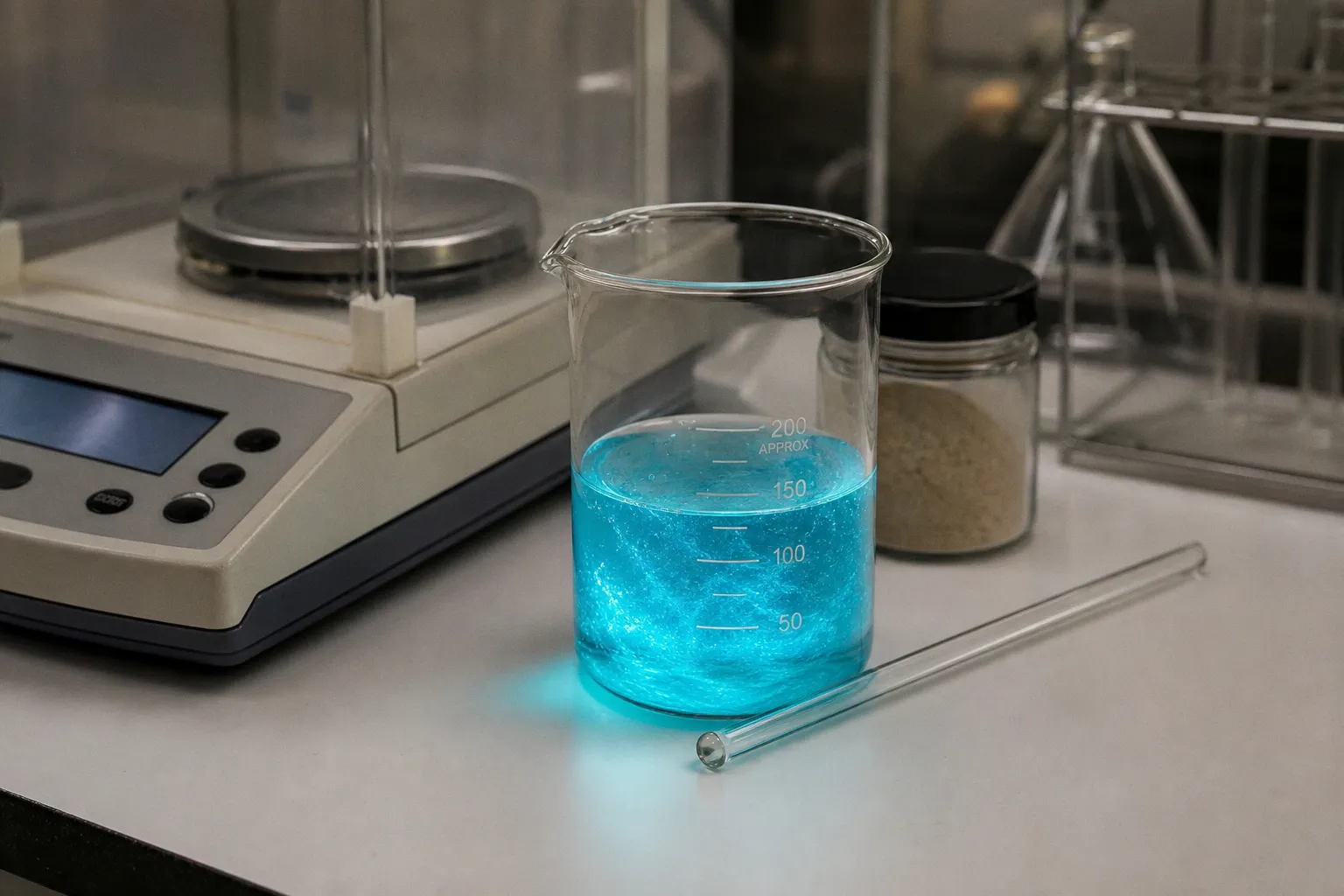
I had been reading about absorption kinetics and the way different delivery formats interact with the digestive system, and a number quietly lodged itself in my thinking: liquid nootropic formulations can reach peak plasma concentrations around twenty minutes earlier than equivalent capsules, simply because they bypass the fifteen-to-twenty-minute dissolution window that solid doses must first negotiate. That gap — modest on paper, palpable in the texture of a workday — is the hinge on which the entire category of liquid cognitive enhancers now turns.
Twenty minutes is the difference between a substance meeting your nervous system at the moment you asked for it, and meeting you after the moment has already passed.
What follows is a closer look at how liquid delivery actually changes the experience of taking a nootropic, why the formulation of these drinks has grown more sophisticated than the early "smart drinks," and where the honest limits of the format still sit — particularly when we hold the question of speed against the longer rhythms of neuroplasticity.
The pharmacokinetics of liquid delivery: why speed matters
When you swallow a capsule, the active compounds inside do not simply become available. They sit in the stomach waiting for the shell to break down — a process that, for most gelatin or plant-cellulose capsules, takes somewhere between fifteen and twenty minutes before the contents are even released into the digestive environment. From there, the powder or compressed material still has to disintegrate, dissolve into the surrounding fluid, and pass through the intestinal lining before reaching the bloodstream. Liquid formulations compress this timeline considerably. Because the active ingredients are already in solution, absorption through the stomach lining can begin within one to four minutes of ingestion, with peak plasma concentrations following roughly twenty minutes earlier than the equivalent capsule dose.
That timing is not a small matter when we think about cognition as a real-time phenomenon. The window in which a person reaches for a focus aid is rarely convenient — it tends to be the mid-afternoon slide, the hour before a difficult conversation, the first hour of deep work after lunch when the body's postprandial dip is pulling focus downward. A delayed peak means the cognitive support arrives after the moment that required it. A faster peak means the support lands inside the window where it can do useful work.
| Delivery format | Time to absorption onset | Time to peak plasma | Practical cognitive window |
|---|---|---|---|
| Standard capsule (gelatin or plant) | 15–20 min (after shell dissolution) | ~45–60 min | Delayed; arrives after the moment |
| Powder mixed in water | 5–10 min | ~30–40 min | Partially compressed timeline |
| Liquid nootropic drink (solution) | 1–4 min | ~20–30 min | Synchronized with the moment of need |
There is also something quieter happening here that I find worth naming. The twenty-minute shift is not just a pharmacokinetic curiosity — it changes how a nootropic actually fits into a working day. When cognitive support arrives inside the window where it is needed, the person reaching for it does not have to push through a low-focus period waiting for a delayed peak. They do not have to schedule their tasks around the timing of a slow-release capsule, or find themselves staring at a problem that has already passed by the time the formula takes effect. A delivery format that reduces the gap between intention and effect fits more gracefully into the rhythm of an actual workday. That kind of alignment — small, practical, easy to overlook — is one of the underappreciated dimensions of this conversation. It is also one of the reasons I have come to think of liquid nootropics less as a substitute for capsules and more as a different tool altogether, designed for a different relationship with time.
Synergistic stacking: beyond simple caffeine and L-theanine
The earliest cognitive beverages leaned heavily on caffeine, often in doses that mirrored energy drinks, and the result was predictable: a sharp lift, a jittery middle, and a familiar crash. The newer generation of nootropic drinks has been built around a different principle — the idea of synergists, compounds that modulate the effect of stimulants rather than simply adding to them.
The most studied of these is L-theanine, an amino acid found in green tea that, at a single clinical dose of 200mg, has been shown to increase alpha brainwave activity — the pattern associated with relaxed attention — and to lower salivary cortisol. Paired with a moderate dose of caffeine, L-theanine produces something I have come to recognize in my own experience as a different texture of alertness: focus without the racing pulse, presence without the spike-and-fall. The ratio matters here, and most well-designed formulations hover in a range that has become recognizable to anyone who has paid attention to the research. This is the foundation on which most modern nootropic drinks are built, and it is the reason the category has carved out space next to rather than behind traditional energy drinks.
Beyond L-theanine, formulators have begun to incorporate compounds with more direct effects on neurotransmitter systems:
- Alpha-GPC — a choline donor that crosses the blood-brain barrier efficiently and supports acetylcholine production, the neurotransmitter most closely tied to learning, memory encoding, and the formation of new synaptic connections.
- Lion's mane and cordyceps mushroom extracts — increasingly common in higher-end blends at doses around 2,500mg, studied for their potential role in supporting nerve growth factor and reducing exercise-induced fatigue.
- Bacopa monnieri — included in many formulations, though with an important caveat about the timescale required for its effects to emerge.
- Adaptogens such as rhodiola rosea and ashwagandha — included for their cortisol-modulating properties and the way they soften the edges of stress on working memory.
What I find worth noticing is the shift in posture this represents. We have moved past the era of "caffeine plus vitamins" into something more architecturally deliberate. A well-formulated nootropic drink is, in essence, a small symphony — each compound playing a part that the others support. The interesting question is no longer "how much caffeine is in here" but "what kind of cognitive state is this formula trying to produce, and what does each ingredient contribute to that state." That reframing matters because it pulls the conversation away from crude stimulant dosing and toward the more interesting territory of modulation and balance.
Nano-emulsification and the future of bioavailability
One of the more interesting technical shifts in liquid nootropics is the adoption of nano-emulsification — the process of breaking fat-soluble active ingredients down into droplets so small, typically under 100 nanometers, that they remain suspended in water and pass through intestinal membranes with far greater ease. This matters because many of the most intriguing nootropic compounds — certain mushroom extracts, curcumin, phospholipid complexes — are lipophilic, meaning they do not dissolve well in water and are notoriously poorly absorbed when delivered in standard formats.
The claims circulating in the industry about bioavailability are significant: some manufacturers cite up to 90% absorption rates for nano-emulsified ingredients, compared to 30–50% for conventional tablets. I am cautious about taking any single number at face value, because bioavailability depends heavily on the specific compound, the matrix it is delivered in, and the individual's digestive physiology. But the directional point holds — nano-emulsification addresses a real absorption problem that has historically limited the effectiveness of fat-soluble nootropics, and it does so without requiring the consumer to swallow a fistful of capsules alongside a fatty meal. The convenience is part of the point. A format that handles its own delivery problem internally is a format that respects the user's time and attention.
What I find most compelling is how this technology changes the practical relationship between the consumer and the formula. A drink that contains a stable, well-absorbed dose of a lipophilic compound is a different object than a drink that simply contains the same compound in powdered form. The medium, in this case, genuinely shapes the message. There are still open questions — stability over shelf life, behavior at different temperatures, how these formulations interact with an individual's gut microbiome — but the directional shift is clear. The format is catching up to the ambition of the formulations.
Market trajectory: the shift toward clean cognitive energy
The numbers around this category are striking. The global nootropic and cognitive health drinks market is projected to grow at a compound annual growth rate of 16.7% between 2025 and 2034, driven by demand for "clean energy" and sustained focus. In the United States specifically, the nootropics market reached approximately $3.39 billion in 2025, and broader energy drink demand surged by nearly 10% in 2024. These are not the numbers of a niche curiosity; they reflect a genuine shift in how a meaningful slice of the population is choosing to manage cognitive energy.
What the numbers do not show — but what I have noticed in conversations with friends, colleagues, and readers — is the qualitative change underneath. The appeal is no longer simply "more caffeine, more focus." It is, increasingly, a rejection of the spike-and-crash cycle that defined the first generation of functional beverages. People are looking for formulations that respect the body's rhythms rather than override them. They want cognitive support that does not ask them to pay for focus with an afternoon of depletion. There is also, quietly, a generational shift at work — younger consumers who have grown up skeptical of sugary energy drinks and are reaching instead for something more measured.
The market is not just growing — it is changing its mind about what cognitive energy should feel like.
This shift has implications for how the products are developed. Manufacturers are under pressure to substantiate claims, to source higher-quality raw materials, and to engage with the genuine complexity of neurotransmitter modulation rather than hiding behind proprietary blends. The category is being shaped, slowly but unmistakably, by an audience that has read enough of the science to ask better questions. That, more than any single product or formulation, may be the most meaningful development in the space right now.
Navigating the efficacy gap: acute effects versus long-term neuroprotection
Here is where I want to slow down, because this is the part of the conversation that often gets lost in marketing. Liquid nootropics are, by their nature, designed for relatively rapid uptake and acute effect. That is their strength and, in a sense, their limitation. Not every compound of interest works on this timescale.
Bacopa monnieri, for example, is one of the most studied botanical nootropics, with a credible body of research suggesting benefits for memory consolidation and verbal learning. But those benefits typically require four to twelve weeks of consistent daily use to become measurable. Taking Bacopa in a drink and expecting an acute cognitive lift is a category error; the compound is not designed for that rhythm. Similarly, the longer-term work of supporting brain-derived neurotrophic factor (BDNF), synaptic plasticity, and the slow remodeling of neural circuits is a project of months and years, not minutes. A formulation that promises both an instant lift and a months-long remodeling effect is, in most cases, doing neither honestly.
A few honest considerations worth holding alongside any formulation:
- The fastest effects are not always the most meaningful ones — and some of the most meaningful effects cannot be fast.
- Long-term safety data for chronic daily consumption of high-dose liquid nootropic stacks in healthy individuals remains genuinely limited.
- The comparative bioavailability of specific botanical extracts in liquid versus powder form across different pH levels is not fully characterized.
- The category itself lacks a standardized regulatory definition in most jurisdictions, which means "nootropic drink" on a label can encompass a wide range of formulations with very different pharmacological profiles.
- Individual variation in response — driven by genetics, gut microbiome, sleep, and baseline neurochemistry — is large enough that any honest formulation should be approached as a personal experiment rather than a universal solution.
I think of it as a difference between two kinds of music. The acute nootropic effect is a single clear note — useful, real, sometimes exactly what the moment needs. The longer work of neuroprotection and plasticity is a chord that has to be held, slowly, until it begins to resonate. Both have their place. Confusing one for the other — expecting the chord from the single note, or expecting the single note from the chord — is where most disappointment with cognitive supplements originates, and it is also where the marketing of this category has done its most consistent disservice to the people it claims to serve.
A grounded practical rhythm
If I had to offer one piece of practical guidance drawn from my own experience and from the science, it would be this: treat liquid nootropics as a tool for acute support within a larger rhythm of cognitive care, not as a substitute for it. Use them when the timing genuinely matters — the post-lunch dip, the first hour of focused work, the window before a cognitively demanding task. Pair them with the slower practices that build the foundation they are designed to support: sleep, physical movement, time in natural light, and the kind of attention to one's own patterns that no formulation can replace.
The twenty minutes saved by liquid delivery is real, and on certain days it matters. So does the architectural care of a well-designed stack, and so does the quiet promise of a category that is slowly learning to take its own claims seriously. But the deeper question — how to sustain cognitive vitality across years rather than hours — is answered by a different cadence altogether, one that asks for patience and returns, in time, a quieter kind of resonance. The drink in your hand is one note in that longer composition. Play it well, and know when to set it down.