Nootropics mushrooms: which species actually boost focus?
The counterintuitive answer is that the mushroom most associated with focus—Lion’s Mane—has not yet earned the status of a reliable focus enhancer. It has the best direct human evidence of any functional mushroom.
Oscar Fitzgerald·Updated: July 25, 2026·12 min read
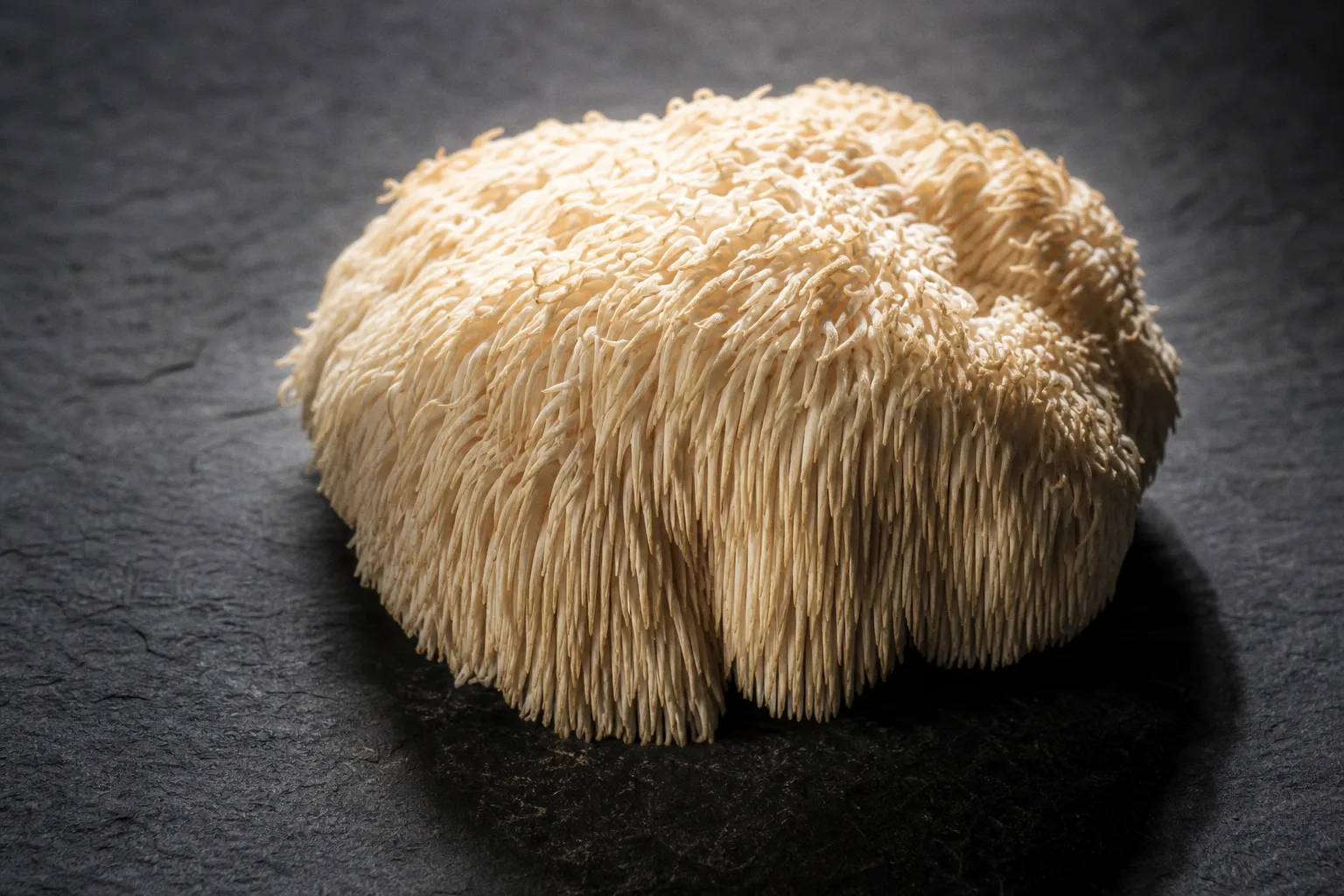
That is not the same as having strong evidence.
This distinction is where the market creates friction. “Nootropic mushrooms” is a useful sales category because it compresses a complex question into a simple promise: take a capsule, improve cognition. But cognitive performance is not one output. Attention, reaction time, working memory, task switching, mood, fatigue resistance, and long-horizon learning are different systems. A compound that slightly changes one test at 60 minutes has not necessarily made you more effective at work by 3 p.m.
If you are looking for functional fungi for focus, the current evidence hierarchy is narrow:
1. Lion’s Mane has small, placebo-controlled human trials with limited and inconsistent cognitive signals.
2. Cordyceps and Reishi do not have convincing direct evidence for improving focus in healthy adults.
3. Most other mushroom nootropic claims are mechanistic theory, animal data, or marketing extrapolation.
4. Product quality and formulation create enough variability that “the Lion’s Mane dose” does not meaningfully exist.
That does not make the category worthless. It means you need a better operating model than belief.
The question is not whether a mushroom has an interesting mechanism. The question is whether its effect survives contact with a controlled human trial.
Why Lion’s Mane Is the Only Serious Candidate—And Why That Is Still Not Enough
Lion’s Mane (Hericium erinaceus) is the only species in this category with direct placebo-controlled human research showing possible effects on selected measures related to attention, reaction time, and working memory.
Its advantage over other mushrooms is not that it has conclusively improved brain performance. Its advantage is that it has at least been tested in a way that can challenge the claim.
One 28-day double-blind pilot study enrolled 41 healthy adults aged 18 to 45 who took 1.8 grams per day of Lion’s Mane. Sixty minutes after the first dose, participants completed a Stroop task faster: mean response time shifted from 737.70 milliseconds at baseline to 688.05 milliseconds post-dose. That result was statistically significant.
But the same experiment found fewer correct responses on immediate word recall in the Lion’s Mane condition. This matters. A clean cognitive enhancer should not be assumed from one favorable metric while another moves in the wrong direction. The output is mixed, not uniformly positive.
A separate randomized crossover study tested a single 1-gram dose of 100% Lion’s Mane fruiting body. Across two hours, the Lion’s Mane condition performed better on selected outcomes, including Serial 7s attempts, N-Back reaction time, and Go-stimulus reaction time. The pattern suggested possible acute effects on complex attention, working memory, and reaction speed.
Then comes the constraint: another acute crossover trial, this time involving 18 healthy adults aged 18 to 35, used 3 grams of a 10:1 fruiting-body extract. At 90 minutes, it found no significant improvement in composite global cognition or mood compared with placebo. Only one individual pegboard task improved.
This is not a minor footnote. It is the central fact.
The trials differ in dose, preparation, sample size, task design, and testing window. A 1-gram whole fruiting body is not equivalent to 1.8 grams daily for four weeks. Neither is equivalent to 3 grams of a 10:1 extract. These inputs may have different active-compound profiles and different pharmacokinetics. Treating them as interchangeable is how a weak evidence base gets converted into a confident consumer claim.
| Study format | Intervention | What improved | What limits the conclusion |
|---|---|---|---|
| 28-day pilot, 41 healthy adults | 1.8 g/day Lion’s Mane | Faster acute Stroop-task response after first dose | Immediate word recall was worse; small study |
| Acute crossover trial | 1 g 100% fruiting body | Selected working-memory, attention, and reaction-time measures | Acute findings do not establish durable performance gains |
| Acute crossover trial, 18 adults | 3 g of 10:1 fruiting-body extract | Pegboard task only | No significant gain in composite cognition or mood |
If you map your cognitive goals precisely, Lion’s Mane might be worth an experiment. If your goal is “better focus,” that phrase is too broad to evaluate honestly. You need an observable output: fewer task-switches during deep work, faster error-free processing in a defined task, or stable reaction time under fatigue.
The evidence does not currently support saying that Lion’s Mane reliably boosts focus in healthy people. It supports a narrower statement: some acute trials show signals on some cognitive tasks, but the effects are small, inconsistent, and highly dependent on the intervention tested.
Acute Performance Is Not Neuroplasticity
The marketing language around Lion’s Mane often goes further than the human evidence.
You will see references to nerve growth factor, brain-derived neurotrophic factor, synaptic repair, neuroplasticity, and “brain regeneration.” These ideas are compelling because they imply structural leverage: not merely a better afternoon, but a better brain.
The problem is translation.
Cell and animal findings can generate hypotheses. They cannot prove that a supplement increases BDNF, raises NGF, promotes synaptic growth, or improves neuroplasticity in healthy humans. No completed posted human trial in the current evidence base demonstrates those outcomes for Lion’s Mane.
This is a common asymmetry in cognitive enhancement. The mechanism can sound larger than the observed outcome. A mushroom extract may influence pathways linked to neuronal maintenance in a laboratory model, while producing no meaningful change in real-world attention, learning rate, or work quality in humans.
That gap should change how you read labels. “Supports neuroplasticity” is not equivalent to “improves memory.” “Contains compounds studied for nerve growth factor activity” is not equivalent to “makes you cognitively sharper.”
A practical framework separates three layers:
- Mechanistic plausibility: Does the compound interact with a pathway that could matter?
- Controlled human signal: Does it outperform placebo on a defined cognitive measure?
- Useful personal effect: Does it improve an output you care about enough to justify cost, friction, and risk?
Lion’s Mane has plausible mechanisms and limited human signals. It has not cleared the third layer for most people by default. That has to be tested, not presumed.
Mechanisms create hypotheses. Repeatable changes in your actual work output create decisions.
Cordyceps and Reishi: Popular for Wellness, Not Validated for Focus
Cordyceps cognitive performance claims are usually built around energy, oxygen utilization, exercise capacity, or fatigue narratives. Reishi mushroom brain health claims often borrow from its long history in traditional use and its broad “adaptogen” positioning.
Neither category gives you a direct basis to expect better concentration.
A 2017 randomized study followed 96 healthy young volunteers for 30 days using a commercial combination of Ophiocordyceps sinensis—commonly sold as Cordyceps—and Ganoderma lucidum, or Reishi. The result was clear at the level that matters: no significant cognitive advantage over placebo.
The combination did not significantly improve global cognition, memory, executive function, attention, information-processing speed, visuospatial ability, verbal function, or motor skills.
That study does not prove that Cordyceps or Reishi can never affect cognition. It also cannot isolate either species because they were given together. But it does remove a popular shortcut: you cannot cite this trial as evidence that a Cordyceps-Reishi stack improves healthy cognitive performance. It did not.
This is the current map:
- Lion’s Mane: limited direct human cognitive evidence; findings are mixed.
- Cordyceps: no direct clinical basis here for claiming improved focus in healthy adults.
- Reishi: no direct clinical basis here for claiming improved focus in healthy adults.
- Turkey Tail, Chaga, and similar species: no located direct clinical evidence establishing independent focus benefits in healthy adults.
There may be reasons to consume some of these mushrooms as foods or as part of a broader wellness routine. That is a different proposition. The cognitive-performance claim requires cognitive-performance evidence.
Why Supplement Labels Make Dose Comparisons Almost Meaningless
The most practical problem in the nootropics mushrooms market is not choosing between species. It is knowing what the product actually represents.
“Lion’s Mane extract” can refer to materially different inputs:
- whole fruiting body powder;
- fruiting-body extract;
- mycelium;
- mycelium grown on grain;
- a blend of mycelium and fruiting body;
- a product standardized to a named compound class;
- a product that displays an extract ratio without showing the underlying active profile.
These are not semantic differences. They affect what you are taking.
The clinical studies already demonstrate the problem. One used 1 gram of 100% fruiting body. Another used 1.8 grams per day over 28 days. Another used 3 grams of a 10:1 fruiting-body extract. There is no validated conversion that tells you these protocols are equivalent, and no evidence-based “focus dose” follows from them.
An extract ratio—such as 8:1 or 10:1—does not automatically tell you potency. It states something about the relationship between raw material and final extract, but not necessarily the concentration, bioavailability, or relevance of the compounds that affect a human outcome. It can be a useful manufacturing detail. It is not a cognitive-performance guarantee.
If I were assessing a Lion’s Mane product for a personal trial, I would reduce the decision to four questions:
1. What biological material is used? Look for a clear statement of fruiting body, mycelium, or both. Vague “mushroom complex” language creates avoidable uncertainty.
2. Does the label disclose the amount per serving? A proprietary blend prevents clean dose tracking and makes iteration impossible.
3. Can you keep the input stable? Do not change your mushroom product, caffeine intake, sleep schedule, and training volume in the same week. You will not know what caused the output.
4. Is the product independently tested for identity and contaminants? Supplements are not pre-approved for safety and effectiveness before marketing in the United States, except in limited circumstances involving certain new dietary ingredients.
The goal is not to find a perfect label. The goal is to reduce noise enough to run an interpretable experiment.
A mushroom nootropic stack adds another layer of noise. Combine Lion’s Mane with caffeine, L-theanine, adaptogens, choline donors, magnesium, and several “brain support” compounds, and any perceived effect becomes difficult to assign. The stack may feel sophisticated. From a systems perspective, it is often an attribution failure.
Start with one variable.
Safety Is Usually Quiet Until It Is Not
Lion’s Mane has generally appeared tolerable in short-term human studies. Longer trials have reported mild gastrointestinal effects—abdominal discomfort, nausea, or diarrhea—usually in fewer than 10% of treated participants. At least one acute hypersensitivity reaction has also been described.
Clinically apparent liver injury has not been reported in the small clinical-trial base summarized by LiverTox. That is reassuring but limited. Absence of reported injury is not a guarantee of safety across products, doses, combinations, and individuals.
The operational rule is simple: “natural” is not a safety category.
Be more conservative if you have a history of mushroom allergy, unexplained reactions to supplements, persistent gastrointestinal sensitivity, or a medical condition managed with multiple medications. A supplement positioned for focus should not become a source of low-grade nausea, disrupted eating, skin symptoms, or anxiety about interactions. The cognitive upside, if it exists, is currently too modest and uncertain to justify forcing through adverse effects.
Stop a trial rather than negotiating with clear symptoms. This is not a test of discipline.
How to Test Lion’s Mane Without Fooling Yourself
For most healthy people, sleep consistency, morning light exposure, protein and energy intake, training recovery, caffeine timing, and distraction architecture have much larger effect sizes than any mushroom capsule is likely to offer.
That does not mean you must ignore Lion’s Mane. It means you should place it correctly in the hierarchy: an optional marginal lever, not a foundation.
Use a compact N-of-1 protocol instead of relying on vague impressions.
1. Choose one output before you begin. For example: complete a 25-minute writing block with no phone checks; track average reaction time in the same validated task; or measure error rate in a repetitive analytical workflow.
2. Stabilize the major inputs for two weeks. Keep wake time, caffeine dose and timing, work block, and baseline diet reasonably consistent. You are reducing friction in the experiment, not trying to live perfectly.
3. Use one clearly labeled Lion’s Mane product. Do not introduce a blend. Do not add a new stimulant or “brain stack” at the same time.
4. Record results at fixed intervals. Acute studies assessed performance from roughly 60 to 120 minutes after dosing. If you are testing an acute effect, measure at a similar consistent window.
5. Run enough repetitions to expose novelty effects. A productive first day may reflect expectation, better sleep, or an unusually easy task list. Look for repeated directional change across multiple comparable sessions.
6. Compare against a baseline, not an imagined ideal. If your output does not improve in a measurable way, the intervention has not earned a permanent place in your system.
This is less glamorous than buying a complex functional-fungi formula. It is also how you prevent your cognitive protocol from becoming a collection of expensive stories.
The Real Answer to the Mushroom Nootropic Question
Which nootropics mushrooms actually boost focus? As of now, none can be described as reliably proven to do so in healthy adults.
Lion’s Mane is the one species with a credible, if preliminary, claim to further investigation. It has shown limited acute signals in controlled human studies involving attention, reaction time, and working memory. It has also produced null or mixed outcomes. The evidence does not establish a best dose, a superior extract ratio, a preferred fruiting-body-versus-mycelium formulation, or a durable effect on productivity.
Cordyceps and Reishi remain wellness products with unvalidated focus claims. Their cognitive marketing currently runs ahead of clinical performance data.
That leaves you with a useful, if unspectacular, conclusion: treat Lion’s Mane as an experiment, not an identity. Keep the formulation stable, define one cognitive output, and test it for 14 comparable work sessions. If you cannot detect a meaningful improvement in focus quality, reaction speed, or error rate, remove it. The supplement does not need to be bad for it to be nonessential.