Dubai Joins Riyadh, Doha, Muscat, Manama and Kuwait City Emerge as Global Medical Tourism Giants as GCC Transf
The Gulf Cooperation Council is being marketed as a unified medical-tourism bloc for 2026, with Dubai joining Riyadh, Doha, Muscat, Manama, and Kuwait City under an "AI healthcare and neuro-regenerative" banner.
Julian Vance·updated June 20, 2026
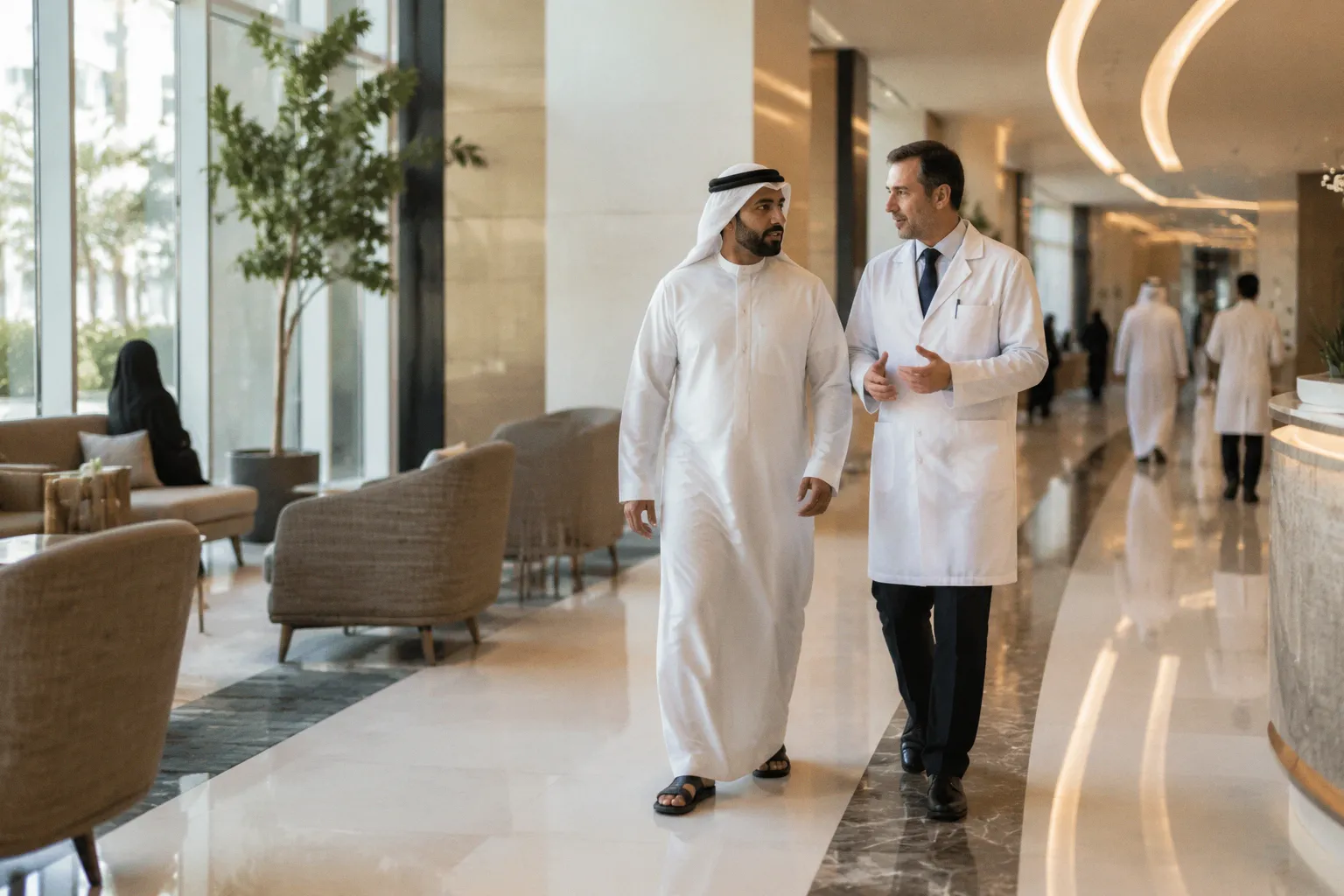
The Coordinated Pitch
The available coverage positions the six cities as a coordinated cluster rather than discrete competitors, each staking overlapping territory in AI-assisted diagnostics, elective procedures, and regenerative services. What the report does not specify is the mechanistic substrate of the "neuro-regenerative" designation. Whether this refers to autologous cell therapies, exosome-based interventions, neurorehabilitation infrastructure, or a broader marketing category remains unaddressed in the sourced material. For a longevity audience, that distinction is not cosmetic. It determines efficacy thresholds, regulatory scrutiny, and the cohort profile for which the intervention has any peer-reviewed validation.
Adjacent Market Signals
The regenerative medicine segment more broadly shows forward momentum worth contextualizing. Longevity.Technology reports that Istesso has advanced a regenerative approach to muscle loss — a relevant development for sarcopenia, which functions as a core modulator of late-life morbidity and functional decline. Separately, SNS Insider, cited via Yahoo Finance UK, projects the medical collagen market to reach USD 624.98 million by 2035, while SRI (via openPR.com) estimates the nerve repair and regeneration market at $23.84 billion by 2034, growing at a 9.0% CAGR. These are projection figures, not outcome data. We observe that CAGR estimates in this segment historically run ahead of validated clinical efficacy — a pattern worth holding in mind when "neuro-regenerative" is invoked without a cited cohort study.
What to Verify Before Booking
Three practical filters apply. First, does the named clinic publish mechanistic detail — cell type, dose, delivery route, and follow-up duration — in a peer-reviewed venue, or only in marketing collateral? Second, is the intervention registered in a recognized trial database with an active protocol ID? Third, does the "AI healthcare" component describe diagnostic tooling, clinical decision support, or back-office automation? Each answer materially changes the value proposition. Until those specifics are accessible, the GCC expansion is best categorized as an infrastructure development worth monitoring — not yet an evidence-grade pathway for longevity protocols.