Go Healthy with Taiwan 2026: Apply for $30,000 Health Innovation Grant
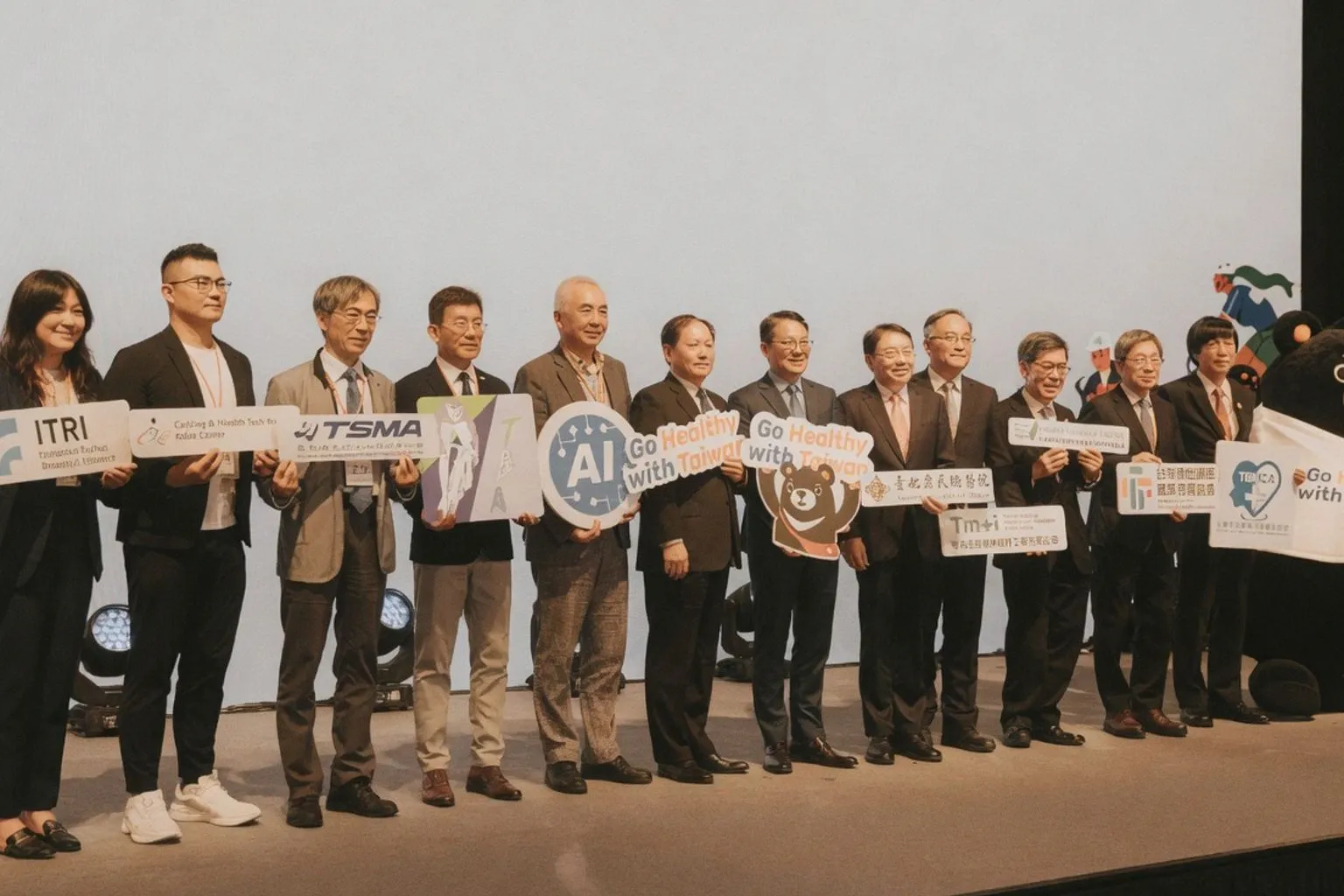
Taiwan Excellence has opened applications for the 2026 iteration of "Go Healthy with Taiwan," a global competition offering USD 30,000 to health and wellness innovators building solutions around Taiwanese technology.
Brian Woodward·updated July 09, 2026
The Mechanism: From Lab-Grade Analysis to Smartphone-Accessible Diagnostics
One documented case illustrates the program's scope. Winston Yang, founder of New York-based IdeasLab Inc (est. 2017), developed XView AI — a system that performs real-time biomechanical analysis from standard smartphone video. No external sensors, no marker-based motion capture rigs, no persistent internet connection required. The software maps joint mechanics, tracks rotation velocities, and identifies stress-point deviations in moving human bodies at a resolution previously confined to funded sports-science laboratories.
The efficacy claim is modest but specific: during early testing, professional golfer KJ Choi's son recorded his father's swing and ran it through XView AI without disclosure. The system flagged an early extension flaw and a contour failure embedded in Choi's mechanics. After correction, Choi — then 54 — won two consecutive tournaments. He subsequently became IdeasLab's first outside investor. These are reported outcomes from a single cohort, not controlled trials; the mechanistic claim, however, is that AI-driven motion analysis can surface pre-symptomatic movement compensations before they manifest as clinical injury.
Why This Matters for the Longevity-Focused Reader
The broader pattern worth noting here is not one grant program but a structural shift: precision biomechanical assessment — once the domain of elite sports medicine and well-funded research institutions — is undergoing a cost collapse. For individuals optimizing long-term musculoskeletal health, the implication is straightforward. Early detection of repetitive-strain biomechanics (compensatory gait patterns, asymmetric loading, subclinical joint dysfunction) could become a routine self-monitoring parameter, analogous to how continuous glucose monitoring moved from clinical pathology into everyday biohacking protocols within a decade.
Taiwan's institutional push through this grant accelerates that trajectory. The competition explicitly solicits proposals that pair Taiwanese hardware or software capabilities with global health-outcome applications — creating a pipeline for exactly the kind of cost-reduced, sensor-free screening tools that longevity practitioners would benefit from integrating into periodic self-assessment.
What to Watch
Applications for the 2026 cycle are currently open, though specific deadline and eligibility details were not disclosed in the available reporting. Researchers, early-stage health-tech founders, and clinical innovators working at the intersection of AI-driven diagnostics and accessible wellness monitoring should track Taiwan Excellence's official channels for submission criteria.
We observe in the data a consistent trend: each cycle of AI-driven biometric tooling that removes a layer of hardware dependency brings preventive physiological assessment closer to routine self-optimization. The grant itself is modest in scale; its significance lies in the signal — that state-backed innovation ecosystems are now actively courting proposals in precisely this category. Whether the resulting tools reach the longevity community at usable fidelity remains an open question, but the direction of travel is unambiguous.