Good heart rate variability: is higher always better?
Last spring, I started glancing at my morning HRV reading the way some people check the weather—half-curious, half-anxious, looking for a verdict. A green number meant a good day. A red one meant my nervous system was dragging.
Jessica Clayton·Updated: July 16, 2026·8 min read
The Quiet Assumption Behind a Number
That framing isn't wrong, exactly. But it is incomplete in ways that matter, especially once you begin to look more carefully at what the metric actually captures.
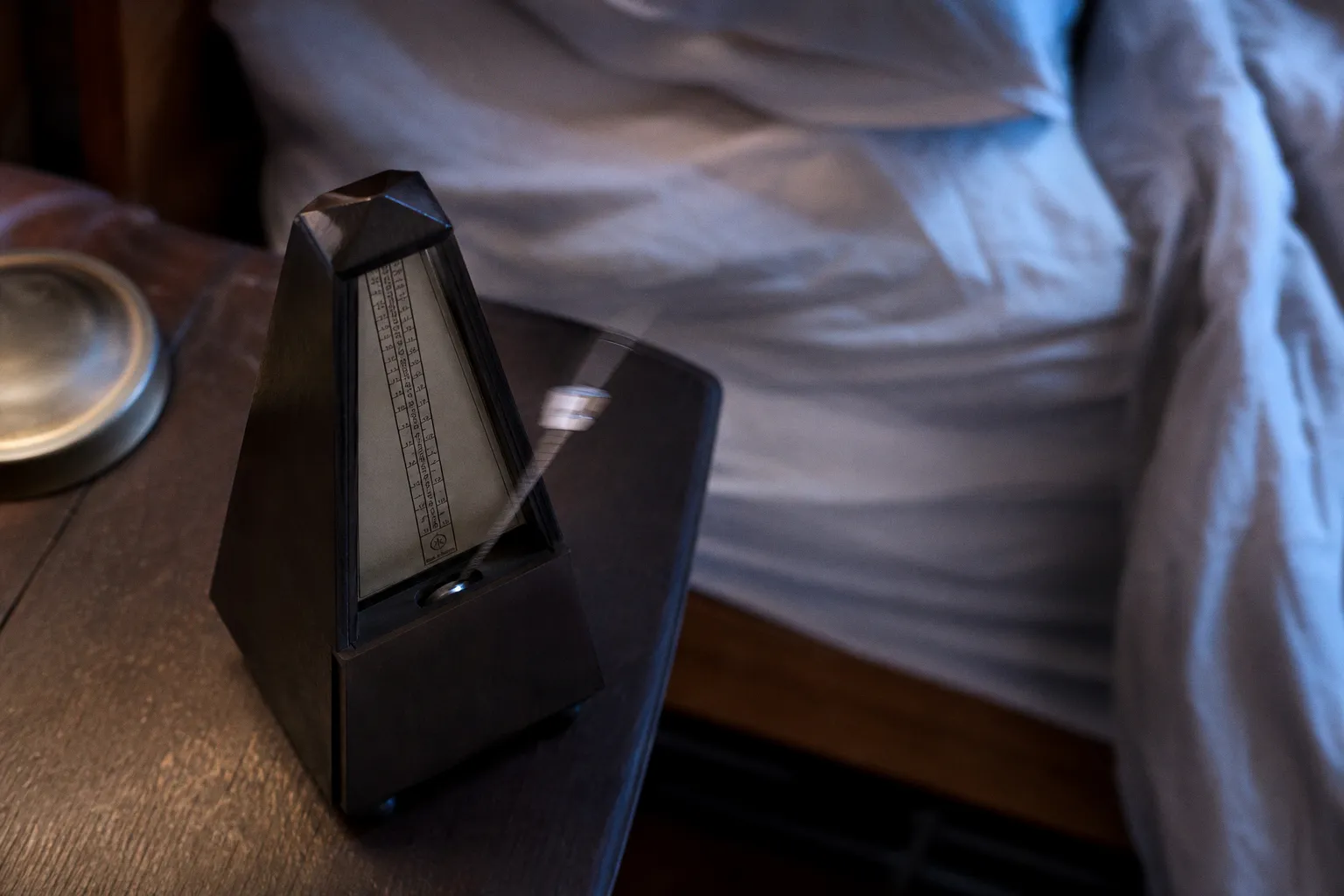
Heart rate variability measures the millisecond-by-millisecond variation between successive heartbeats. It is a window into the conversation between your sympathetic nervous system—the accelerator—and your parasympathetic nervous system, often described as the brake. When that conversation is rich, with each breath nudging the heart to speed up and slow down in gentle oscillation, HRV tends to rise. When the conversation collapses into a metronomic thud, HRV drops. In this sense, yes, a higher reading generally reflects parasympathetic dominance, a body leaning into "rest-and-digest," a system capable of down-regulation after stress.
But "generally" is doing an enormous amount of work in that sentence, and the body is a far more interesting instrument than a single rising line.
A higher HRV is not a finish line. It is a measure of how fluidly your nervous system moves between effort and ease.
The Ceiling No One Talks About: Parasympathetic Saturation
The first time I came across the term "parasympathetic saturation" was in a paper on endurance athletes, and it stopped me mid-scroll. The idea is simple, almost musical: when the parasympathetic branch is so dominant that it floods the sinus node with acetylcholine, the heart's natural pacemaker becomes, in a sense, over-modulated. The respiratory oscillations flatten. The beat-to-beat variation that defines HRV actually begins to compress—not because the body is stressed, but because the brake pedal has hit the floor.
This is the paradox at the upper end of the spectrum, and it is one of the more counterintuitive findings in the recovery literature. In elite athletes undergoing heavy training blocks, HRV sometimes plateaus or even dips, not from exhaustion but from a kind of physiological over-tuning. The system is working hard to maintain homeostasis, pouring resources into repair, and the variation metric paradoxically narrows. Functional overreaching sits in a similar neighborhood: a body pushed to its adaptive edge, mounting a massive recovery effort, can produce readings that, on a glance, look like decline. I have watched my own numbers do this after particularly demanding weeks—drop into amber just as my body seemed, by every other measure, to be settling into deeper rest.
If you train hard and watch your HRV fall, the story isn't always one of breakdown. It can also be a story of an organism pouring everything into repair. Learning to read that distinction—between depletion and deep restoration—is one of the quieter skills in this practice, and it takes more than a single number to develop.
The body is not a scoreboard. It is an instrument with its own resonance, and the same note can be played by very different ensembles.
When a High Number Is a Warning
There is a darker corner of the high-HRV conversation, and it deserves more air than it usually gets. Sudden, unexplained spikes in heart rate variability can, in some cases, reflect cardiac arrhythmias rather than cardiovascular virtue. Atrial fibrillation, ventricular tachycardia, and various forms of heart block can all produce irregular intervals that artificially inflate HRV metrics. The mathematical variation rises, but the underlying rhythm is not the supple, breath-locked oscillation we associate with health. It is noise dressed up as signal.
A useful reference point: variation between heartbeats greater than 0.12 seconds, when not tied to the breathing cycle, can suggest an underlying arrhythmia rather than healthy respiratory sinus arrhythmia. Consumer wearables are not diagnostic tools—they cannot adjudicate between a parasympathetic flourish and a dysrhythmic event—but they can occasionally surface data that warrants a closer look. If you ever see a sharp, sustained departure from your established pattern, particularly alongside symptoms like palpitations, dizziness, breathlessness, or unusual fatigue, that is a conversation worth having with a clinician, not a Reddit thread or a YouTube comment section.
This is one reason I find the "higher is better" framing so slippery. A high number can mean flexibility, recovery, parasympathetic richness—or it can mean something mechanically off in the electrical system of the heart. The same digit, two entirely different stories. And the most expensive device on your wrist still cannot tell you which one you are in.
| What a high HRV reading can reflect | What a low HRV reading can reflect |
|---|---|
| Strong parasympathetic tone and good recovery | Acute stress, illness, or insufficient sleep |
| Successful adaptation after a training block | Overtraining or chronic under-recovery |
| A naturally flexible, well-conditioned heart | Dehydration, alcohol, or a late meal |
| In some cases, an arrhythmia worth investigating | In rare cases, simply your genetic baseline |
The Trap of Comparing Across Bodies
One of the more persistent myths in the wearable era is the idea that your HRV number can be benchmarked against someone else's. It cannot, and the sooner that illusion is set aside, the more useful the data becomes. HRV is profoundly individual—shaped by age, training history, genetics, hormonal status, even the position you happened to be in when the reading was taken. A resting RMSSD of 65 ms might represent a peak adaptation in one person and a depressed state in another, with no contradiction between them.
Healthy adults span a wide spectrum, from below 20 ms at one end to over 70 ms at the other, and young, highly trained athletes have been measured above 200 ms. What this means in practice is that the meaningful question is not "What is a good HRV?" but "What is a good HRV for me, this week, in this season of my life?" The number is a relationship between you and your own nervous system, not a position on a universal curve. Comparing your morning reading to a friend's is about as informative as comparing your resting heart rate to a stranger's and concluding that one of you is broken.
This is also where the metrics can become gently corrosive. A fifty-five-year-old recreational cyclist measuring herself against the HRV norms of a twenty-five-year-old endurance athlete is not gathering useful data. She is gathering quiet dissatisfaction, and the allostatic load of that comparison is, in itself, a form of stress her nervous system has to absorb. The biological rhythm you are tracking has its own tempo, and the work is to learn it—not to bend it toward someone else's cadence.
Learning the Cadence That Is Yours
After several years of wearing a ring on my finger and a watch on my wrist, the practice that has served me best is almost embarrassingly simple: I track the trend, not the daily note. A reading taken in isolation is a snapshot, easily distorted by a late dinner, a vivid dream, a glass of wine, a stressful email. A reading taken across weeks, in the same conditions, at the same time of day, is a conversation. That conversation, more than any single green or red dot, is where the signal actually lives.
A few principles I keep returning to, more as reminders than as rules:
- Measure consistently. Same time of day, same position, same general morning routine. The body is most readable when the variables around the reading are stable, and consistency is what turns noise into a pattern.
- Look for sustained drift. A single low morning after a poor night of sleep is a footnote. A two-week downward trend, especially one that survives a good night of rest, is a paragraph worth reading.
- Pair the number with felt experience. A 70 ms reading on a day you feel wired and anxious tells a different story than a 70 ms reading on a day you feel calm and steady. The data and the inner weather should inform each other, not contradict in silence.
- Protect the foundations. Sleep, breath, daylight in the morning, training load matched to recovery capacity—these shape the metric more than any supplement or protocol ever will. The number is downstream of how you live.
- When in doubt, defer to a human. Wearables are a mirror, not a diagnosis. If a pattern feels off, let a clinician look at it; the device is a starting point, not a verdict.
The deeper work, the one I find genuinely restorative, is letting the number become a teacher rather than a judge. A good heart rate variability is not the highest figure you can reach. It is the rhythm that belongs to you, observed with patience, responded to with care. The body's wisdom is in its variation—its ability to speed up and slow down, to tighten and release, to move between effort and ease without getting stuck at either pole. Your job is not to maximize that. Your job is to listen to it, and to give it somewhere quiet to be heard.