Heart rate variability training for stress resilience
The space between one heartbeat and the next is never identical, and that small variation carries more information than most people realize.
Jessica Clayton·Updated: July 13, 2026·7 min read
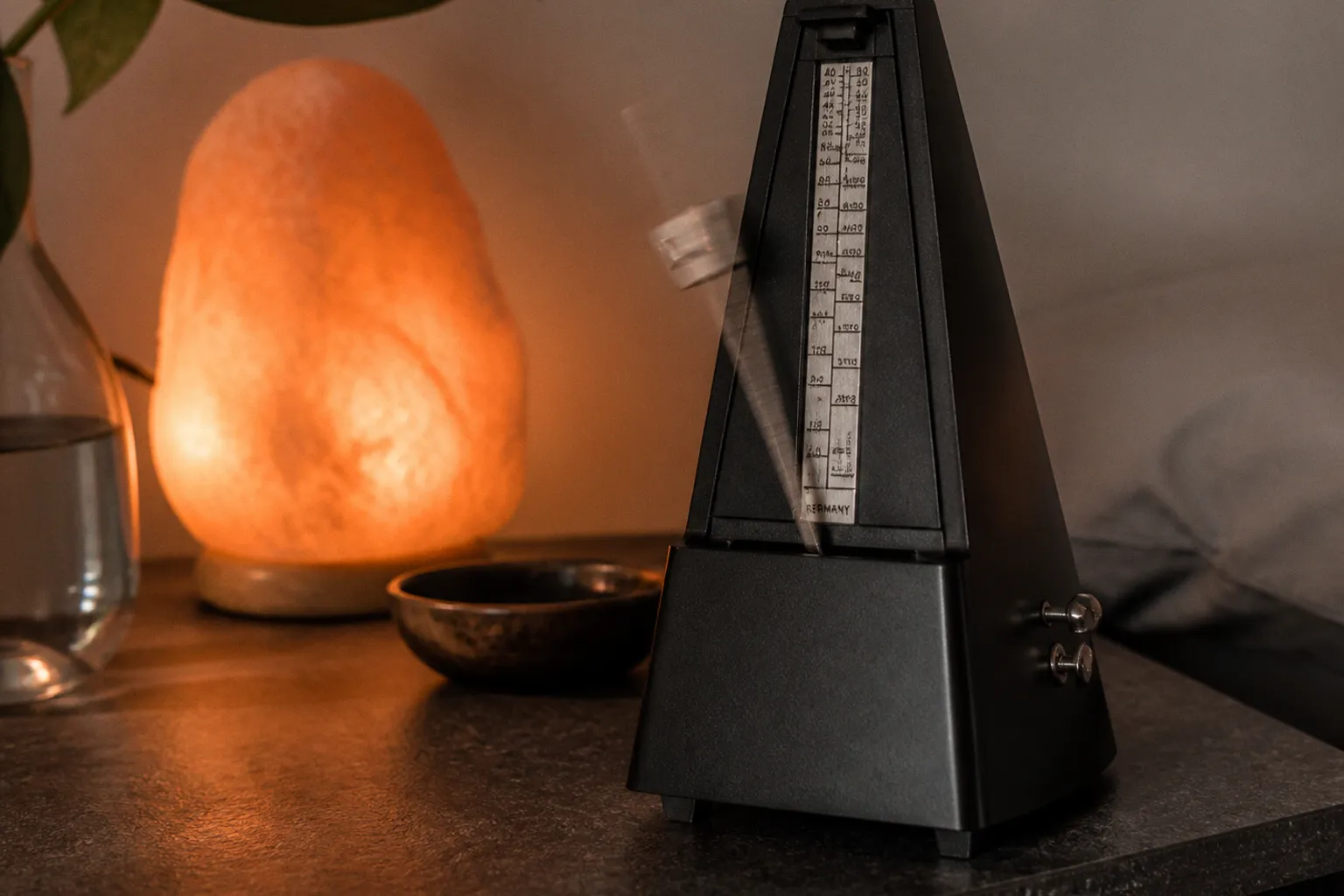
The Heart's Hidden Cadence: What HRV Training Actually Teaches You
I came to it sideways. For years, I treated recovery as the absence of effort, the quiet gap between harder days where nothing much happened. Then I started wearing a simple chest strap at night and watching the morning numbers drift, and the picture changed. The metric at stake was not performance but flexibility — the autonomic system's capacity to swing between sympathetic mobilization and parasympathetic return. What I had been calling rest was actually a kind of rigid holding; what the variability data was showing me was the difference between being quiet and being recovered.
The Physiology of R-R Intervals: Reading the Autonomic Conversation
Every heartbeat begins with an electrical signal that travels through the atria and ventricles in a recognizable wave. The interval from one R-wave to the next — what researchers call the R-R interval — is the raw material of HRV. If the heart beat with mechanical precision, every interval would be identical. It isn't. The variation is itself the signal.
Two branches of the autonomic nervous system are continuously negotiating that variation. The sympathetic branch accelerates the heart and tightens vascular tone; the parasympathetic branch, primarily through the vagus nerve, slows it back down. When parasympathetic influence is strong, the intervals lengthen and shorten fluidly. When sympathetic tone dominates — during acute threat, poor sleep, or chronic overload — the intervals become more uniform, more rigidly paced. HRV, in essence, is a real-time readout of how flexibly the nervous system can move between these poles.
Two metrics dominate the field. RMSSD — Root Mean Square of Successive Differences — captures short-term variability and is what most consumer devices and morning readings track. SDNN — Standard Deviation of NN intervals — tends to be reserved for longer 24-hour recordings in clinical settings. Both are useful, but neither tells the whole story alone.
The goal of HRV training is not to raise a number but to widen the range in which your nervous system can move.
Resonant Frequency Breathing: The Mechanics of Vagal Stimulation
The most accessible entry point into HRV training is also the oldest: the breath. Somewhere between 4.5 and 7 breaths per minute, the body enters a state researchers call resonance — a frequency at which the respiratory system, cardiovascular system, and baroreflex loop synchronize into a coherent oscillation. In that band, each inhale slightly accelerates the heart; each exhale slightly slows it, and the swings become larger and more rhythmic.
I noticed the shift within a week of consistent practice. Five minutes in the morning, five minutes before sleep, breathing at roughly a five-second inhale and six-second exhale through a simple app that paced the cadence. There was no dramatic sensation, no surge of warmth, no flushing of the circulatory system. Just a gradual settling, as though the body had been holding a faint tension I had stopped noticing and was now letting go of.
The mechanism is straightforward to describe. Slow, paced breathing stimulates stretch receptors in the lungs and modulates pressure in the chest cavity, which in turn influences the vagus nerve. The vagus — the longest cranial nerve in the body — carries parasympathetic signals back toward the heart, slowing the sinus node and increasing beat-to-beat variability. With practice, this is not merely an acute effect; studies suggest that regular resonant breathing can shift baseline autonomic tone, expanding the range within which the system operates.
A few ways to bring it into your own week:
- A short morning session of five to ten minutes, paced with a biofeedback app or a simple internal count
- A pre-sleep sequence at slightly longer exhale ratios, allowing the body to drift toward parasympathetic dominance before lights out
- A mid-afternoon reset on days of high cognitive load, when the sympathetic current tends to run hot
- Integrating the cadence into a walk or low-effort movement, letting the breath and steps fall into the same rhythm
The technique is gentle. That gentleness is the point — it is the practice of down-regulation in its most direct form.
Cold Exposure and the Parasympathetic Rebound Effect
If resonant breathing is the slow hand on the autonomic steering wheel, cold exposure is the sharp turn that tests it. Stepping into cold water triggers an immediate sympathetic response — heart rate climbs, breathing quickens, blood vessels constrict. The body interprets the temperature as threat and mobilizes accordingly. What follows, once the cold is left behind, is the part that matters for HRV: a parasympathetic rebound.
That rebound is not a small thing. As the body warms back up, vagal tone increases, heart rate settles below baseline, and variability typically expands. Repeated over weeks and months, this cycle appears to train the autonomic system to recover more efficiently from acute stressors of all kinds — not only cold, but emotional strain, intense cognitive work, and physical exertion.
I should be honest about what the evidence does and does not yet support. The research is consistent that acute cold exposure produces a measurable post-immersion rise in HRV. What it has not pinned down is the exact dose — how long, how cold, how often — required to produce a lasting shift in baseline variability. That calibration remains highly individual. Some practitioners thrive on two-minute plunges; others find a thirty-second rinse sufficient to elicit the response. Listening to your own recovery curve matters more than following a script.
Interpreting Your Data: Why Trends Outweigh Absolute Numbers
Here is the place where most people, including me at first, go wrong. We open our morning app and read the number as a verdict: high, low, passing, failing. But HRV is profoundly individual. A forty-year-old endurance athlete and a thirty-year-old beginner may both register entirely different "normals," and neither number is more correct than the other.
What actually matters is your own trajectory. A rising seven-day average, a tightening of day-to-day variability, a clear separation between stressed and rested days — these are the patterns worth watching. The single morning reading is mostly noise.
A few interpretive anchors that have helped me:
| Signal | What it often reflects |
|---|---|
| Sharp single-day dip | Acute stressor — poor sleep, alcohol, illness, hard training |
| Gradual weekly decline | Accumulated allostatic load; a recovery week may be in order |
| Rising trend over weeks | Adaptation, improved fitness, or successful stress management |
| Flat-line low values | Possible overtraining, chronic under-recovery, or measurement artifact |
| High morning RMSSD | Strong overnight parasympathetic activity, often a sign of good sleep |
The table is a starting vocabulary, not a diagnostic tool. The deeper skill is pairing the data with how you actually felt, slept, and moved — letting the number contextualize the experience rather than override it.
HRV is not a score you earn but a conversation you learn to hear.
Sleep Architecture and the Nocturnal Recovery Connection
The single most powerful lever I have found on my own HRV is not breathwork, not cold, but the quality of the night that preceded the morning reading. During deep sleep, parasympathetic activity dominates; heart rate drops, and beat-to-beat variability reaches its nightly peak. REM sleep contributes a different signature, with bursts of sympathetic activity interspersed with quieter intervals. Together, the two stages sculpt the architecture of nocturnal recovery — and the variability that emerges from that architecture becomes the morning number on the screen.
When sleep fragments — when awakenings punctuate the night, when circadian timing slips, when alcohol erodes REM — the nocturnal HRV curve flattens. The body has spent less time in the deep, restorative oscillations it needs. This is why chasing a higher daytime HRV through breathwork while neglecting the night is, in my experience, a kind of architectural mismatch. The foundation has to come first.
Practically, that has meant a few quiet adjustments: dimming the house after sunset, holding a consistent sleep window even when the day runs late, and treating the hour before bed as a wind-down rather than a final productivity sprint. Each of these small choices seems to widen the gap between sympathetic day and parasympathetic night — and the morning HRV rises accordingly, not because I trained harder but because I rested more honestly.
Closing Reflection
Heart rate variability training, at its best, is less a discipline of doing and more a discipline of listening. It teaches you to notice the oscillation between effort and ease — to recognize when the body has slipped toward rigid sympathetic dominance and to invite it back toward a wider, more rhythmic range. The