High Q Quantum Sensors Accelerate Alzheimer’s Drug Discovery
High Q Technologies, a University of Waterloo spin-off, has developed a quantum sensor platform that aims to fundamentally accelerate the preclinical phase of drug discovery for diseases characterized by protein misfolding, such as Alzheimer’s.
Brian Woodward·updated July 15, 2026
The Mechanistic Advantage of EPR Spectroscopy
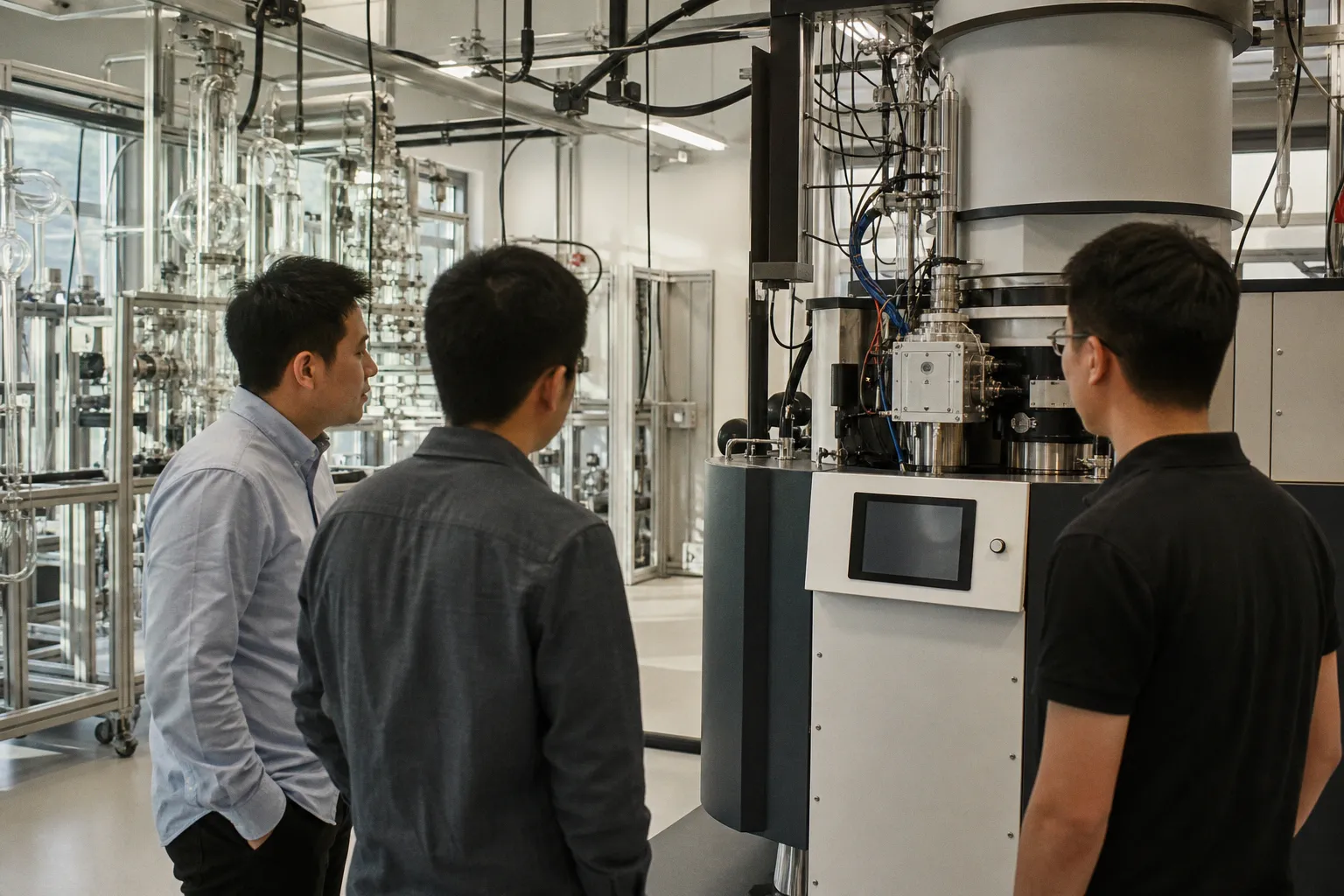
The core of High Q’s approach is its electron paramagnetic resonance (EPR) spectrometer, named Fathom. Traditional structural techniques like X-ray crystallography often freeze proteins in a single, static conformation. In contrast, EPR spectroscopy can detect the entire range of a protein’s flexible states in solution simultaneously. This provides a more complete picture of how a protein interacts with potential drug candidates. As the company’s managing director noted, drugs work by affecting this very motion, and resolving the full dynamic spectrum is key to understanding efficacy.
Potential Impact on the Longevity Research Pipeline
For the longevity and neurodegeneration research community, the promise is one of efficiency. The drug discovery pipeline, particularly for complex disorders like Alzheimer’s, is notoriously slow and resource-intensive. By offering a tool to map protein dynamics with higher fidelity, High Q’s platform could theoretically reduce the time and cost associated with identifying and optimizing lead compounds. This represents a shift from targeting static structures to modulating functional motion—a more nuanced and potentially more effective approach to intervention.
Strategic Expansion and Current Status
The company is now scaling its reach through partnerships. A recent collaboration with Creative Biostructure, a contract research organization, is designed to provide broader pharmaceutical access to its quantum-enabled analysis. While the technology’s potential is significant, the translation from enhanced preclinical insight to accelerated clinical timelines remains an empirical question. The true efficacy of this quantum-sensor approach will be demonstrated not in the lab alone, but in its ability to generate viable drug candidates that advance through trials, a process whose final verdict is years away.