NMN and NR Pathways for Effective Cellular NAD+ Restoration
Recent head-to-head trials and parallel cohort studies have reframed a long-running debate in longevity research.
Julian Vance·Updated: June 16, 2026·8 min read
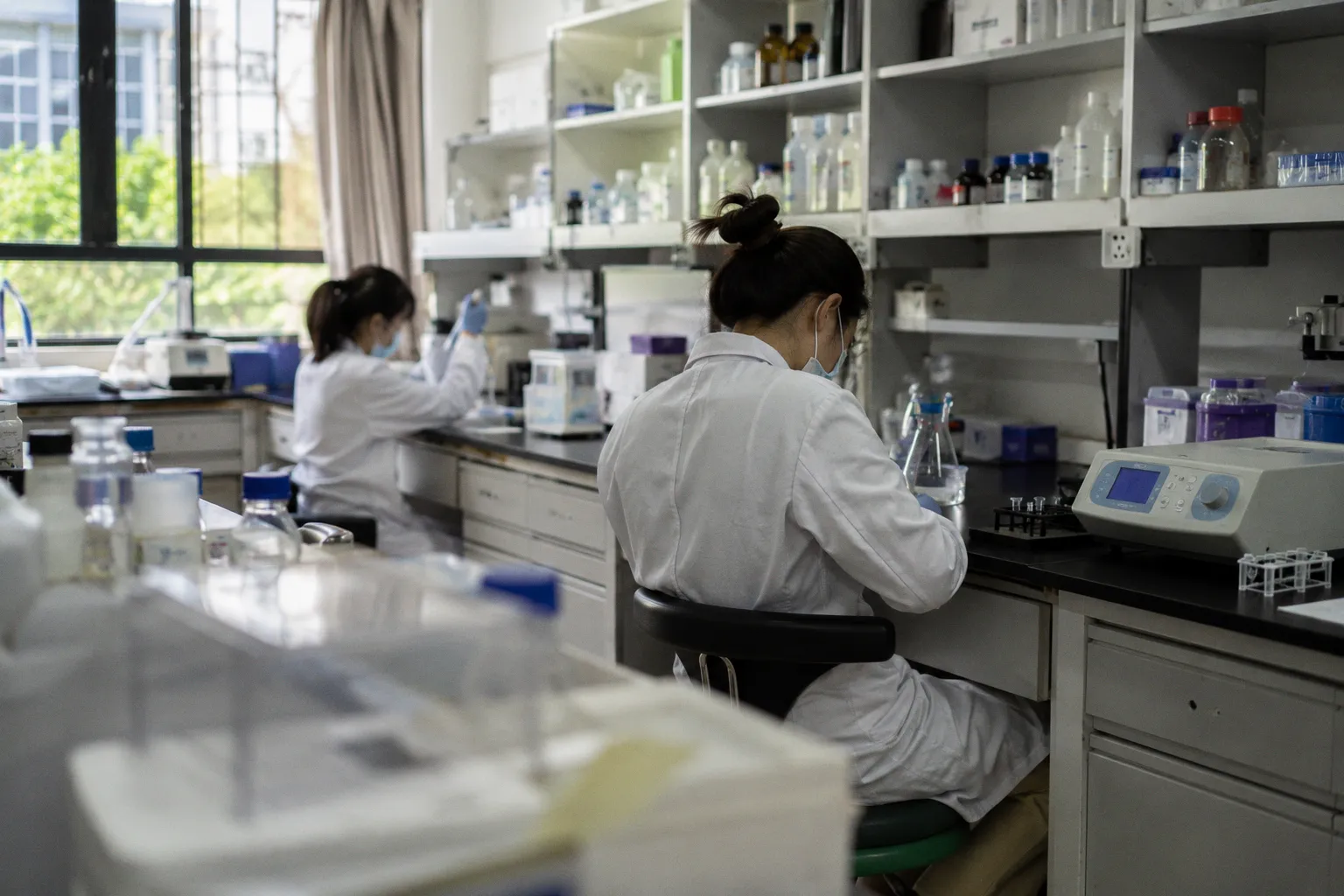
The difference between NMN and NR is not potency; it is the route of entry into the salvage pathway.
The Enzymatic Bottleneck: How NRK1/2 and NAMPT Dictate NAD+ Synthesis
Both precursors converge on the same intracellular coenzyme, but the enzymatic choreography preceding that convergence is distinct. NR enters cells and is phosphorylated by nicotinamide riboside kinases 1 and 2 (NRK1 and NRK2) — the only enzymes capable of converting NR into NMN. From that point, the newly synthesized NMN is adenylated by NMN adenylyltransferases (NMNAT1–3) into NAD+. The defining feature of this route is its dependence on NRK1/2 expression, which varies substantially across tissues: skeletal muscle, liver, and brown adipose tissue show robust NRK activity, while other compartments are considerably less responsive.
NMN, by contrast, does not require an upstream kinase step. It is synthesized in the salvage pathway from nicotinamide (NAM) via the rate-limiting enzyme nicotinamide phosphoribosyltransferase (NAMPT). Endogenous NMN is therefore the immediate product of NAMPT activity, and supplemental NMN is, in effect, a substrate positioned one step closer to NAD+ than NR. Mechanistically, this places NAMPT at the center of the entire precursor economy. When NAMPT activity is suppressed — as occurs with chronic inflammation, circadian disruption, and ageing itself — both endogenous salvage and exogenous NMN utilization are constrained.
The clinical consequence is straightforward. NR efficacy is gated by NRK1/2 availability. NMN efficacy is gated by NAMPT, which under most physiological conditions remains the more permissive bottleneck, and by transporter dynamics, which we examine next.
| Parameter | NR (Nicotinamide Riboside) | NMN (Nicotinamide Mononucleotide) |
|---|---|---|
| Initial enzymatic step | NRK1/NRK2 phosphorylation | Bypasses kinases; converted via NAMPT-adjacent routes |
| Distance to NAD+ | Two enzymatic steps (NR → NMN → NAD+) | One enzymatic step after transport (NMN → NAD+) |
| Rate-limiting dependency | NRK1/2 expression in target tissue | NAMPT activity and Slc12a8 transporter availability |
| Tissue responsiveness | High in muscle, liver, brown adipose | Broad, with notable intestinal uptake |
| Plasma stability | Relatively stable | Less stable; rapid tissue extraction |
Beyond Diffusion: The Role of the Slc12a8 Transporter in NMN Uptake
For much of the past decade, the dominant assumption was that NMN — being a charged nucleotide — entered cells poorly and would have to be degraded extracellularly to NR first. The 2019 identification of Slc12a8, a specific NMN transporter in the mouse small intestine, overturned that assumption and reframed the pharmacokinetics of the molecule. Slc12a8 expression rises in response to fasting and to high-fat feeding, and it facilitates rapid uptake of luminal NMN with kinetics that are incompatible with simple paracellular diffusion.
We now have a working model. In the upper gastrointestinal tract, NMN is absorbed through Slc12a8, enters the enterocyte, and is converted to NAD+ within minutes. This produces a measurable surge in tissue NAD+ in the intestinal mucosa and, through subsequent redistribution, in the liver. The same transporter is expressed at lower levels in other tissues, including pancreatic islets and parts of the central nervous system, but the quantitative contribution of these extra-intestinal pools to systemic NAD+ restoration remains under active investigation.
Two mechanistic implications follow. First, the Slc12a8 pathway explains why orally administered NMN produces a faster and steeper rise in circulating NAD+ than would be predicted from a diffusion-only model. Second, individual variation in Slc12a8 expression — driven by age, diet, microbiome, and possibly genetic background — may account for a non-trivial fraction of the inter-individual variability observed in NMN supplementation trials. For practitioners trying to interpret a null or muted response in a given patient, transporter biology is now a legitimate component of the differential.
Metabolic Consumption: Why CD38 and PARP Activity Accelerate NAD+ Depletion
Precursor delivery is only half of the equation. The age-related decline in tissue NAD+ is not driven solely by reduced synthesis; it is equally a story of accelerated consumption. Two enzyme families dominate this side of the ledger.
Poly-ADP-ribose polymerases (PARPs), particularly PARP1, consume NAD+ during the detection and repair of single- and double-strand DNA breaks. PARP activity rises with cumulative DNA damage, oxidative stress, and chronic low-grade inflammation. In tissues with high turnover or high oxidative load, sustained PARP activation can deplete local NAD+ pools faster than salvage pathways can replenish them.
CD38, a multifunctional ectoenzyme, is the second major consumer. CD38 degrades NAD+ into nicotinamide and ADP-ribose, and its expression increases markedly with age in several immune and metabolic tissues. CD38 activity has been causally linked to age-related NAD+ decline in mouse models, and CD38 inhibition — whether pharmacological or genetic — restores tissue NAD+ in aged animals. For human biology, the data are more suggestive than definitive, but the direction is consistent.
The combined effect is a contraction of the NAD+ pool on both ends: less synthesis through NAMPT, more consumption through CD38 and PARP1. This is the mechanistic substrate that NMN and NR are designed to compensate. A protocol that elevates precursor supply without addressing chronic CD38 or PARP overactivation will, all else equal, produce a smaller net gain in NAD+ than the precursor's intrinsic pharmacology would predict. This is a point that most consumer-facing coverage of NAD+ boosters consistently elides.
Tissue-Specific Dynamics in NAD+ Precursor Supplementation
The expectation that a single precursor will dominate across every tissue is, on current evidence, untenable. NRK1/2 expression varies. Slc12a8 expression varies. NAD+-consuming enzyme expression varies. The result is tissue-specific pharmacodynamics, and several recent studies have begun to map it.
In skeletal muscle, NR appears to hold a meaningful edge in animal models, consistent with the relatively high NRK1 expression observed in myocytes. In liver and intestinal mucosa, NMN uptake via Slc12a8 is the more efficient route, and oral NMN produces robust hepatic NAD+ elevation in both rodent and human studies. In the brain, both precursors face substantial delivery challenges — the blood-brain barrier limits uptake of charged nucleotides, and the relative contribution of NRK versus Slc12a8 pathways in central nervous system tissue is not yet quantified at clinical resolution.
Three additional observations warrant attention:
- Age modulates precursor responsiveness. Older cohorts in human trials show smaller absolute NAD+ gains from both NR and NMN than younger cohorts receiving equivalent doses, consistent with reduced transporter density and altered salvage enzyme activity.
- Dosing schedules matter. Several recent trials have moved away from single daily boluses toward split dosing, on the hypothesis that the salvage pathway operates near saturation at high precursor concentrations and that continuous input produces a higher integrated NAD+ response.
- The microbiome is a non-trivial confounder. Nicotinamide produced by gut bacteria feeds back into the salvage pathway, and the relative abundance of NAD+-producing taxa varies across populations.
For clinicians and serious self-experimenters, the practical conclusion is that a one-size-fits-all precursor recommendation is mechanistically naive. The choice between NMN and NR should be made with at least some attention to the target tissue and the patient's age, metabolic status, and inflammatory load.
Current Clinical Evidence and the Limits of Longevity Protocols
The most defensible claim in the current literature is also the most modest: both NR and NMN, at typical supplemental doses (250–1000 mg/day), reliably elevate circulating NAD+ in healthy adults, with no serious adverse events reported in trials of up to fourteen weeks. Beyond that, the evidence base thins rapidly.
Hard endpoints — incident disease, functional capacity, mortality — are not yet available for either precursor. Surrogate endpoints (insulin sensitivity, lipid profiles, blood pressure, exercise capacity, vascular reactivity) have shown mixed results, with some trials reporting modest improvement and others showing no detectable change over placebo. The mechanistic rationale remains strong, particularly in the context of age-related NAD+ depletion, but the translation from biomarker shift to clinical benefit is not a step that current data permit. We should not, on present evidence, characterize either precursor as mitigating or reversing age-related disease in humans; the data support restoration of NAD+ levels, with downstream health effects still under investigation.
The unknowns are substantial. Long-term safety data beyond two years of continuous supplementation in healthy populations do not exist. The interaction of NAD+ precursors with common medications — metformin, statins, antihypertensives — is poorly characterized. The optimal dose, schedule, and pharmaceutical form (immediate-release, sustained-release, sublingual, liposomal) remain active research questions rather than settled parameters. For practitioners seeking a more systematic foundation in the enzymology and trial design underlying this field, structured continuing education in bioscience can provide useful context, though it should not be confused with peer-reviewed evidence.
We therefore land on a sober summary. NMN and NR are mechanistically distinct precursors that converge on the same coenzyme via different routes — NR through NRK1/2, NMN through Slc12a8 and NAMPT-adjacent pathways. The choice between them is a question of tissue targeting, transporter biology, and consumption dynamics, not of generic superiority. Both elevate NAD+. Neither has yet demonstrated a hard clinical outcome. The protocol design that respects this asymmetry — matching precursor to tissue, accounting for age-related changes in enzyme expression, and managing the upstream drivers of NAD+ consumption — is the protocol most likely to produce a measurable, interpretable result.
Elevation of NAD+ is a solved problem. Whether that elevation translates into extended healthspan remains an open, and currently underdetermined, question.