HKUST Secures Largest Share of RGC Strategic Topics Grant to Drive Innovation in Elderly Healthcare
HKUST has secured the largest share of the Research Grants Council’s 2026/2027 Strategic Topics Grant among local universities, according to the university.
Brian Woodward·updated July 09, 2026
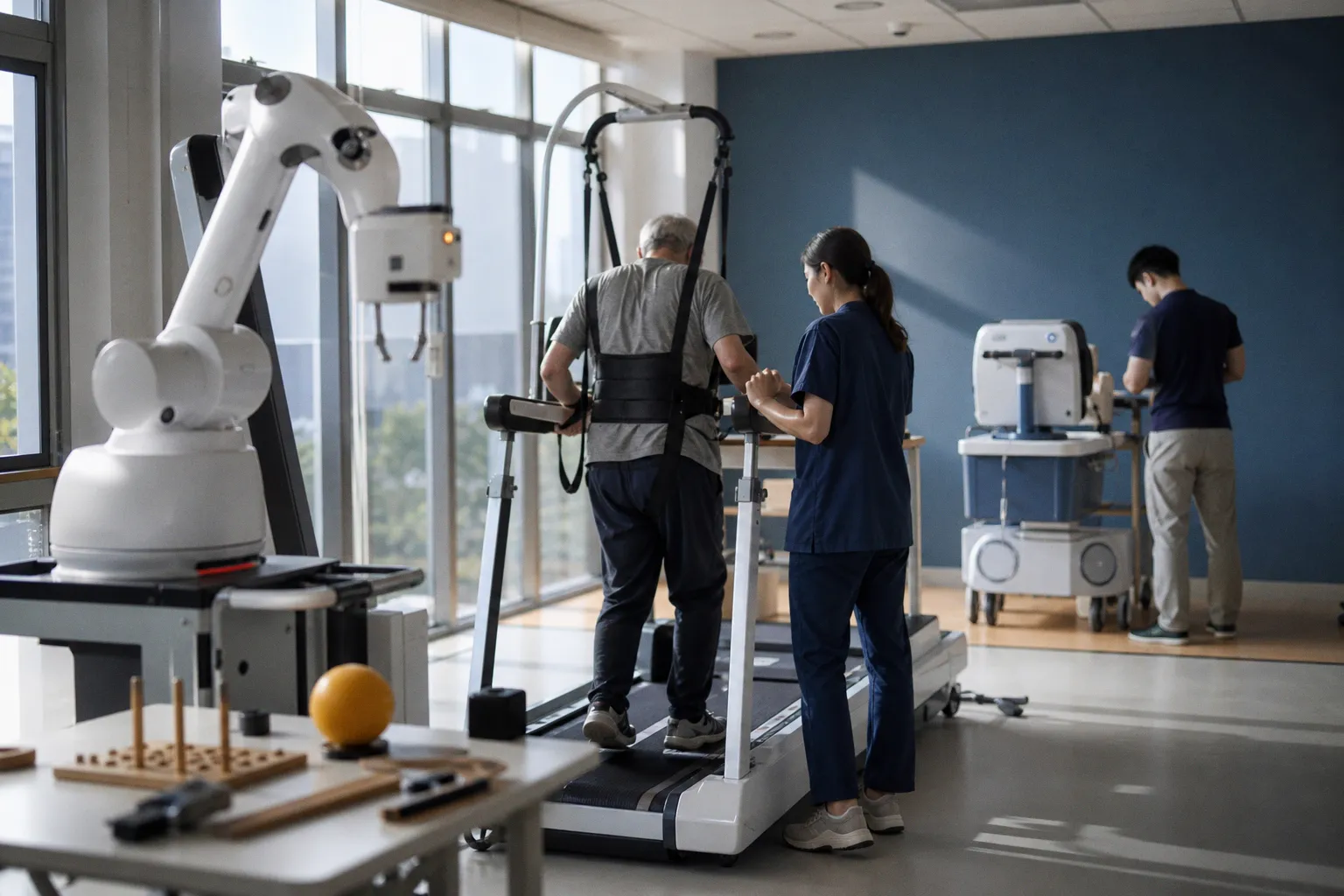
The funded work targets high-burden aging contexts
HKUST says the two projects are built around artificial intelligence in elderly healthcare. One focuses on bacterial infection management in older adults. The other addresses integrated management for Parkinson’s disease.
The infection project is led by Prof. HSING I-Ming of the Department of Chemical and Biological Engineering. Its formal title is “AI-assisted Infection Management in Elderly Hospitals and Nursing Homes: Safeguarding Health through Point-of-Care Technologies and Smart Materials.” It has secured HKD 26.789 million for five years, including university matching funds.
The stated aim is an AI-assisted, end-to-end infection management system. The system would use real-time point-of-care clinical data streams to generate personalized treatment and nursing care plans. The intended setting matters: elderly hospitals and nursing homes, where HKUST notes that many residents, especially those in nursing homes or recuperating in hospitals, are immunosuppressed.
Mechanistically, this is a practical longevity problem. Infection risk in frail older cohorts is not only a matter of pathogen exposure. It is also a function of immune suppression, delayed detection, fragmented documentation, and slow escalation. A system that can modulate care decisions using point-of-care data is plausible as infrastructure. Its clinical efficacy, however, will depend on validation, workflow fit, and whether clinicians can trust the output under time pressure.
AI in eldercare has a workflow problem, not only a model problem
The funding announcement sits inside a broader pattern: healthcare systems are adopting new tools faster than many clinical workflows can absorb them. A separate Healthcare IT Today article describes “innovation fatigue” as a growing problem in hospitals, clinics, and health systems. The article’s core point is clinically familiar: poorly integrated platforms can increase cognitive load, duplicate documentation, and force staff to chase information across systems.
That context is relevant to HKUST’s projects. AI-assisted infection management and Parkinson’s disease management will not be judged only by algorithmic sophistication. They will be judged by whether they reduce friction at the bedside. If a tool adds another interface, another login, or another documentation loop, the theoretical benefit may be diluted before it reaches patients.
This is also why the phrase “end-to-end” should be read carefully. In biomedical technology, end-to-end systems often fail at the seams: data capture, device reliability, nursing adoption, escalation protocols, and auditability. Real-time data streams can improve surveillance. They can also amplify noise if signal thresholds and clinical accountability are not well defined.
The commercial lesson is not unique to medicine. Digital sectors that scale quickly often discover that platform expansion creates its own operational drag; this is visible even in analyses of strategic drivers and emerging shifts in online retail platforms. Healthcare has a narrower margin for error because workflow fatigue can affect care delivery, not just conversion rates.
What to watch before treating this as a longevity breakthrough
The immediate facts are clear: HKUST won a large share of STG funding; the projects are positioned around AI, elderly healthcare, infection management, and Parkinson’s disease; one project has a five-year funding line of HKD 26.789 million. The translational questions remain open.
First, validation design will matter. We would want to see whether point-of-care data improve outcomes compared with existing infection management processes, not merely whether the system can generate personalized plans. Second, integration will matter. The strongest biomarker or decision-support layer can fail if it does not match nursing-home staffing patterns and hospital routines. Third, affordability and localization remain unresolved. A New Age BD report, available only by headline in the current source set, frames expert interest in local innovations to make healthcare affordable. That is a useful caution: eldercare technologies often travel poorly when cost structure and clinical staffing differ.
For biohacking and longevity readers, the practical takeaway is restrained. This is not a consumer supplement story. It is infrastructure research aimed at high-risk older populations. The signal to monitor is whether AI-assisted, point-of-care systems can reduce delay, improve monitoring, and support clinical decisions without increasing administrative burden. Until outcome data appear, the evidence supports interest, not adoption claims.