India Launches INR 50,000 Crore BioEconomy Fund to Accelerate Biotech Innovation
NITI Aayog’s proposal for an INR 50,000 crore BioEconomy Growth Fund represents a significant macroeconomic signal for the biotech sector, with direct implications for research pipelines in cellular aging and diagnostics.
Brian Woodward·updated July 19, 2026
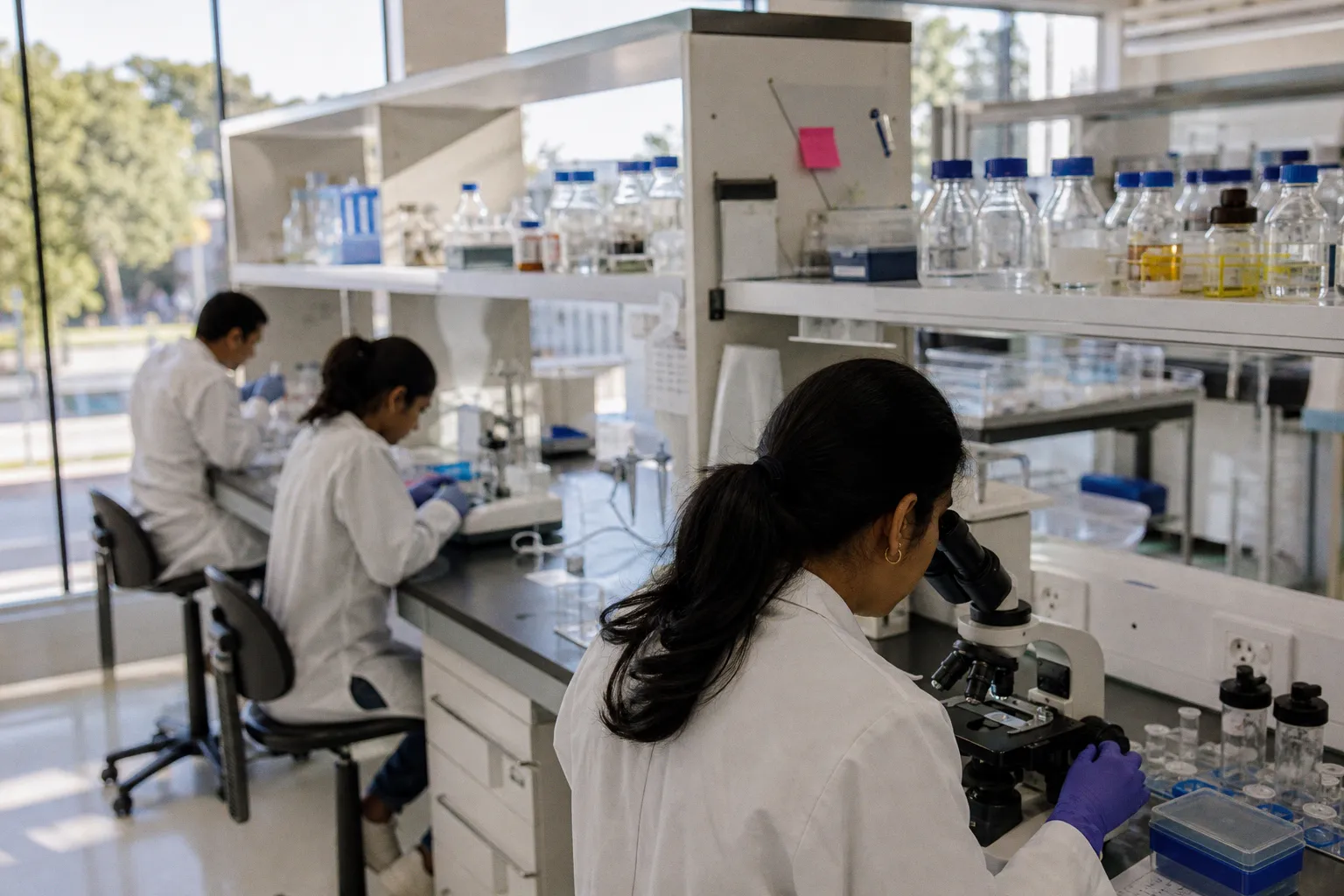
The plan, aimed at elevating India to a top-three global biotech economy by 2035, targets the so-called “valley of death” where promising laboratory research fails to transition to commercial-scale production. For the longevity and biohacking community, this governmental focus on scaling advanced therapeutics, synthetic biology, and biomaterials could alter the global landscape of research availability and cost.
Fund Structure and Mechanistic Focus
The proposed fund for the 2026-2035 period is designed to provide blended finance and catalytic equity. Its operational mandate is explicitly linked to India's broader INR 1 lakh crore Research, Development and Innovation framework, indicating a strategy to de-risk private investment in high-cost, high-reward areas. The supported verticals—advanced therapeutics, diagnostics, and large-scale biomanufacturing—are foundational to the translational pipeline for interventions targeting cellular senescence and biomarker development. A dedicated production-linked incentive (PLI) scheme for biomanufacturing is also recommended to reduce import dependence, a factor that could eventually influence the supply chain and cost structure for raw materials used in longevity research.
National Missions and Regulatory Trajectory
NITI Aayog’s roadmap includes six National BioMissions, among them BioPharmaNext. This mission specifically aims to transition India’s pharmaceutical industry from traditional generics toward gene therapies, cell therapies, and biosimilars. The report highlights a critical market driver: the impending expiration of patents for biologic drugs valued at roughly $300 billion by 2030. This creates a potential influx of more affordable biosimilars into the global market, including treatments that modulate inflammatory pathways or cellular function.
A key bottleneck identified is the regulatory approval process, currently reported to take up to 900 days in India. The roadmap proposes time-bound approvals and regulatory sandboxes, which could streamline the pathway for novel biomaterials or diagnostic tools. The integration of artificial intelligence in drug discovery is also emphasized, with projections suggesting a 20-30% reduction in research costs and 60-80% shorter development timelines—a factor that could accelerate the identification of compounds relevant to aging biology.
Implications for the Longevity Research Ecosystem
We observe in the data a coordinated state-level effort to capture a larger share of the global biosimilar market, projected to reach $73-76 billion by 2030. For analysts tracking the development of senolytics, NAD+ precursors, or novel biomarker assays, the emergence of India as a scaled, cost-competitive biomanufacturing hub is a variable worth monitoring. The success of this roadmap hinges on execution—specifically, the establishment of five proposed bioinnovation hubs to bridge academia and industry, and the modernization of regulatory oversight.
The projected growth of India’s bioeconomy from $195.3 billion in 2025 to $691 billion by 2035 suggests a substantial, sustained allocation of capital and human capital toward biotech. While the timeline for consumer-available interventions remains long-term, this policy direction may foster new cohorts for clinical trials and increase the output of mechanistically characterized compounds from a major Asian research base. The sober assessment, as always, lies in the gap between projection and realization.